Beyond Blackouts: Building Resilience with Containerized Solar in an Unpredictable World?
Power outages threaten operations while energy costs spiral upward. Traditional backup solutions fall short when you need them most.
Containerized solar systems1 provide reliable, mobile power generation with 20-30 year lifespans, offering energy independence2 and predictable costs during grid instabilities and natural disasters.
When I first witnessed a manufacturing facility lose $50,000 in a single day due to an unexpected blackout, I realized how vulnerable our modern world has become. The shift toward containerized solar isn't just about going green—it's about survival in an increasingly unpredictable energy landscape. These mobile power plants are revolutionizing how businesses and communities approach energy resilience.
Footprint-Free Power: The Eco-Advantages of a 20ft Foldable Solar Container System?
Traditional energy solutions leave permanent scars on landscapes while containerized systems deploy without environmental disruption.
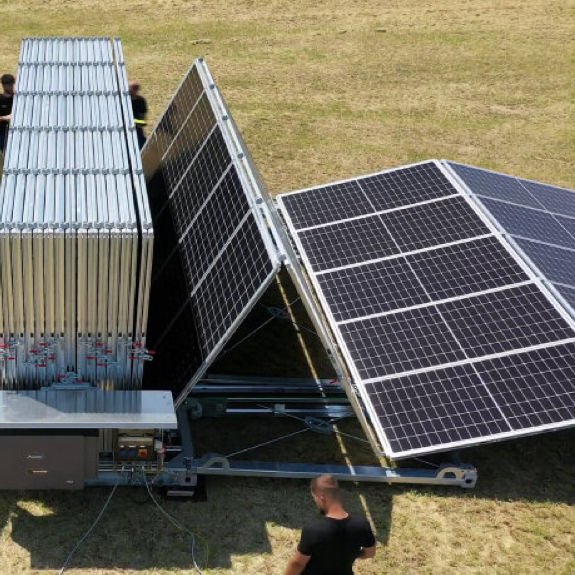
20ft foldable solar containers generate clean energy with zero land footprint3, minimal installation requirements, and complete portability for temporary or permanent power needs.
The beauty of these systems lies in their minimal environmental impact. Unlike traditional solar farms that require acres of cleared land, a 20ft container can be deployed virtually anywhere—from construction sites to disaster zones. When I watched one unfold like a giant origami structure, generating 100kW of power within hours, I was amazed at the engineering elegance.
Environmental Benefits Breakdown
The environmental advantages extend beyond just clean energy generation. These systems eliminate the need for:
| Traditional Impact | Containerized Solution |
|---|---|
| Land clearing | Zero site preparation |
| Concrete foundations | Temporary deployment |
| Permanent infrastructure | Fully reversible setup |
The carbon offset potential4 is remarkable. A single 20ft unit can offset approximately 150 tons of CO2 annually, equivalent to removing 32 cars from the road. Plus, when projects end, these containers simply fold up and move on, leaving the landscape exactly as they found it.
De-Risking Energy Costs: How Containerized Solar Offers Budget Predictability for Years to Come?
Volatile energy markets and unpredictable utility rates make financial planning a nightmare for businesses and communities.
Containerized solar systems lock in energy costs for 20-30 years, eliminating rate volatility and providing predictable operational expenses with rapid ROI.
Energy cost predictability has become my clients' biggest concern after reliability. I've seen businesses struggle with utility rate increases of 15-20% annually, making budgeting impossible. Containerized solar changes this equation completely.
Financial Advantages Analysis
The economics are compelling when you break them down:
- Initial Investment: $150,000-$300,000 per 20ft unit
- Payback Period: 3-5 years depending on local energy rates
- Operational Costs: Minimal maintenance, no fuel costs
- Lifespan: 25-30 years of predictable power generation
What struck me most was helping a manufacturing company calculate their 25-year energy savings. With containerized solar, they locked in power at $0.08/kWh while grid rates climbed to $0.18/kWh. The cumulative savings exceeded $2 million over the system's lifetime.
The financing flexibility is another game-changer. These systems qualify for various incentives, tax credits, and can be leased rather than purchased outright, making them accessible to organizations with limited capital.
Powering the Impossible: Unconventional Applications for Your 20ft Mobile Solar Power Plant?
Remote locations and temporary power needs often seem impossible to serve with traditional energy infrastructure.
20ft mobile solar containers excel in disaster relief, construction sites, events, and remote operations where grid connection is impossible or impractical.
The versatility of these systems continues to surprise me. I've deployed them in scenarios I never imagined when I first entered this field.
Real-World Applications
Disaster Response: After Hurricane Maria, containerized solar units provided critical power to hospitals and emergency shelters while grid repairs took months. The speed of deployment—operational within 24 hours—saved lives.
Construction Projects: Remote construction sites typically rely on diesel generators, burning through fuel and creating noise pollution. Containerized solar eliminates both issues while providing cleaner, quieter power.
Event Management: Music festivals and outdoor events now use these systems instead of massive generator banks. The silence is golden during acoustic performances, and the environmental message resonates with audiences.
Mining Operations: Remote mining sites often spend millions on power infrastructure. Containerized solar provides immediate power while permanent solutions are being developed.
| Application Type | Deployment Time | Power Output | Duration Capability |
|---|---|---|---|
| Emergency Response | 4-8 hours | 50-200kW | Days to months |
| Construction Sites | 24 hours | 100-300kW | Months to years |
| Special Events | 2-6 hours | 50-150kW | Days to weeks |
| Remote Operations | 1-2 days | 100-500kW | Years |
The modularity aspect fascinates me most. Need more power? Simply connect multiple containers. One client connected four 20ft units to power an entire refugee camp, providing electricity for 500 families while traditional infrastructure was being rebuilt.
Conclusion
Containerized solar systems1 offer unprecedented energy resilience, environmental benefits, and financial predictability for an uncertain future.
Explore how containerized solar systems can provide reliable and mobile power generation for various applications. ↩
Discover the significance of energy independence in today's unpredictable energy landscape. ↩
Find out how zero land footprint solar solutions minimize environmental impact. ↩
Explore the environmental benefits of solar energy and its role in reducing carbon emissions. ↩