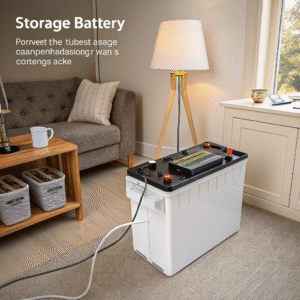
Beyond the Sun and Wind: Why All Renewable Energy Needs a Battery Backup?
Renewable energy is booming, but without storage, it’s like a car without wheels—powerful but going nowhere.
Battery backups are essential for renewable energy systems to store excess power, ensure continuous supply during low generation periods, and stabilize the grid, making renewables reliable and efficient.
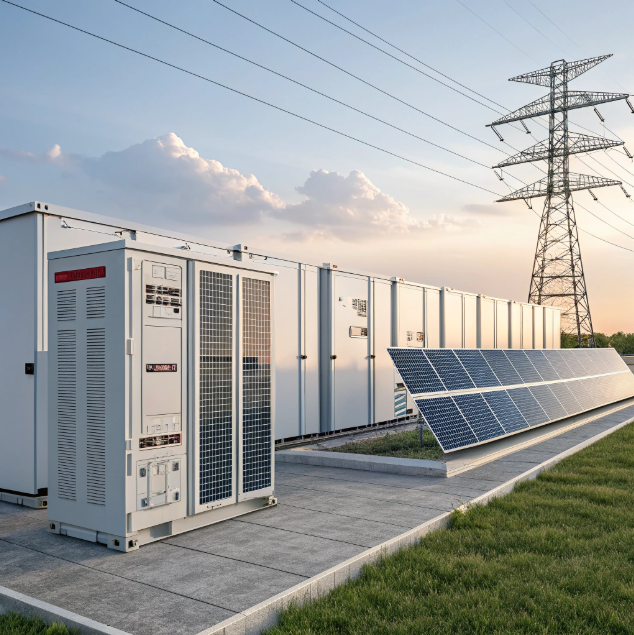
While solar panels and wind turbines capture clean energy, their intermittent nature poses challenges. Let’s explore how batteries bridge this gap and unlock the full potential of renewables.
Seamlessly Green: Integrating Batteries for a Continuous Renewable Power Supply
Ever faced a blackout right when you needed power the most? Renewable energy’s unpredictability makes storage a game-changer.
Battery storage1 ensures uninterrupted power by storing surplus energy during peak production (e.g., sunny/windy periods) and releasing it when generation drops (e.g., nighttime or calm weather).
Dive Deeper: How Batteries Complement Renewables
The Intermittency Challenge
Renewables like solar and wind are weather-dependent. Without storage, excess energy is wasted, and shortages lead to reliance on fossil fuels.
Battery Technologies Leading the Charge
| Type | Pros | Cons |
|---|---|---|
| Lithium-Ion | High efficiency, scalable | Limited lifespan, costly |
| Flow Batteries | Long cycle life, scalable | Lower energy density |
| Solid-State | Safer, higher energy density | Early-stage, expensive |
Real-World Applications
- Home Systems: Tesla Powerwall stores solar energy for nighttime use.
- Grid-Scale: Hornsdale Power Reserve (Australia) saves excess wind energy, reducing grid instability.
Batteries transform renewables from supplemental to primary energy sources, cutting carbon footprints and costs.
Grid Guardians: The Role of Renewable Energy Storage in Modernizing Our Power Infrastructure
What happens when millions of solar panels feed energy into an outdated grid? Chaos—unless batteries step in.
Energy storage modernizes grids by balancing supply-demand fluctuations, reducing reliance on peaker plants, and enhancing resilience against outages.
Dive Deeper: Storage as Grid Infrastructure
Demand-Supply Balancing
Batteries absorb excess renewable energy during low demand and discharge during peaks, preventing blackouts.
Case Study: California’s Duck Curve
- Problem: Solar overproduction midday, shortages at dusk.
- Solution: Batteries store midday surplus for evening use, flattening the curve.
Future-Proofing Grids
- Microgrids: Storage enables local energy independence (e.g., Puerto Rico post-hurricane).
- AI Integration: Smart systems2 predict demand and optimize storage dispatch.
Without storage, renewable grids risk instability. With it, they become resilient, efficient, and scalable.
Decentralizing Power: How Renewable Energy Storage Empowers Homes, Businesses, and Communities
Tired of soaring utility bills and grid vulnerabilities? Storage puts power back in your hands—literally.
Battery storage decentralizes energy systems, enabling homes/businesses to save money, achieve energy independence, and even sell excess power back to the grid.
Dive Deeper: The Rise of Prosumers
Energy Independence3
- Off-Grid Living: Solar + storage systems eliminate reliance on utilities (e.g., remote cabins).
- Emergency Backup: Batteries keep lights on during outages (critical for hospitals).
Financial Benefits
| Scenario | Savings |
|---|---|
| Time-of-Use Rates | Store cheap off-peak energy |
| Net Metering | Earn credits for excess solar |
Community Microgrids4
- Shared storage in neighborhoods reduces costs and boosts resilience (e.g., Brooklyn’s Solarize project).
Storage isn’t just for corporations—it’s a tool for democratizing energy.
Conclusion
Battery backups5 are the missing link in renewable energy, enabling reliability, grid stability, and consumer empowerment—key to a sustainable future.
Learn about the mechanisms of battery storage and its critical role in energy management. ↩
Discover how AI and smart systems improve energy storage efficiency and grid management. ↩
Explore how battery storage empowers homeowners to achieve energy independence and save costs. ↩
Learn about community microgrids and their role in promoting local energy resilience and sustainability. ↩
Explore how battery backups enhance the reliability and efficiency of renewable energy systems. ↩