Deploying Instant Grids: How a 20ft Solar Container Creates Immediate Power in Challenging Environments?
Problem: Remote locations desperately need reliable power. Agitation: Traditional grid connections take months. Solution: 20ft solar container1s deliver instant, independent energy.
A 20ft solar container provides immediate power by integrating solar panels, batteries, and inverters into one mobile unit, delivering 50-200kW capacity within hours of deployment to any location.
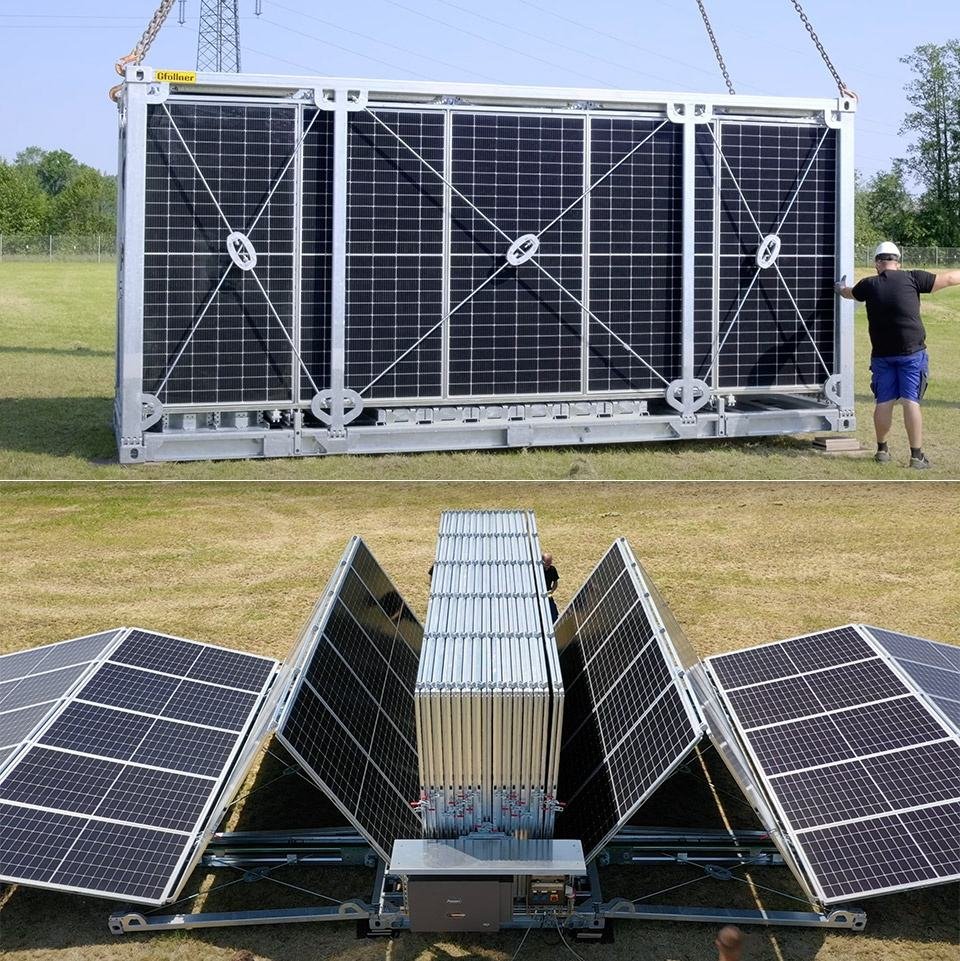
When I first witnessed a solar container being deployed in a disaster zone, I was amazed at how quickly it transformed a powerless community into a functioning hub of activity. The beauty lies not just in the technology, but in the human impact—watching relief workers finally able to charge communication devices and power medical equipment was truly moving.
From Disaster Relief to Construction Sites: How Do Versatile PV Containers Adapt to Different Scenarios?
Problem: Every emergency needs different power solutions. Agitation: One-size-fits-all approaches fail. Solution: Modular containers adapt to unique requirements instantly.
Foldable PV containers adapt through modular design2, adjustable power output (20-500kW), and quick reconfiguration, serving disaster relief, construction sites, and remote operations with customized energy solutions.
The versatility of these systems never ceases to amaze me. I've seen the same container model deployed for hurricane relief in Florida one month, then reconfigured for a mining operation in Nevada the next. This adaptability comes from their modular architecture and standardized components.
Deployment Scenarios and Power Requirements
Different applications demand varying power capacities and deployment speeds. Emergency situations require rapid setup—typically within 2-4 hours—while construction sites might prioritize sustained output over months. The flexibility shines through scalable configurations.
| Application | Power Range | Setup Time | Key Features |
|---|---|---|---|
| Disaster Relief | 50-100kW | 2-4 hours | Emergency outlets, medical equipment support |
| Construction Sites | 100-200kW | 4-8 hours | Heavy machinery compatibility, weather resistance |
| Remote Operations | 200-500kW | 8-24 hours | Extended autonomy, communication systems |
The genius lies in the plug-and-play nature3. I remember watching a team set up power for a field hospital after an earthquake—the container was operational before the medical tents were even fully assembled. This speed can literally save lives.
Beyond the Panels: What Makes the All-in-One Brains of Mobile Solar Systems So Smart?
Problem: Solar panels alone aren't enough. Agitation: Complex integration creates failures. Solution: Integrated control systems optimize everything automatically.
Smart mobile solar systems integrate MPPT controllers4, battery management, load balancing, and remote monitoring into unified control systems, maximizing efficiency while preventing component damage through automated optimization.
The real magic happens inside the container, where sophisticated control systems orchestrate every component. I've always been fascinated by how these "brains" can predict weather patterns, adjust charging cycles, and even communicate system health to operators thousands of miles away.
Integrated Component Management
Modern container systems go far beyond simple solar-to-battery connections. The control systems manage multiple energy flows simultaneously—solar input, battery charging/discharging, load distribution, and grid tie-in when available. It's like having an energy conductor orchestrating a complex symphony.
The Battery Management System (BMS)5 particularly impressed me during a recent installation. It continuously monitors cell voltage, temperature, and current, preventing dangerous conditions while maximizing battery life. These systems can extend battery lifespan by 30-50% compared to basic controllers.
Smart inverters add another layer of intelligence, providing clean AC power while protecting sensitive electronics from voltage fluctuations. I've seen these systems seamlessly switch between solar, battery, and backup generator power without interrupting critical operations.
| Component | Smart Feature | Benefit |
|---|---|---|
| MPPT Controllers | Weather prediction algorithms | 15-20% efficiency gain |
| Battery Management | Predictive maintenance alerts | 30-50% longer lifespan |
| Load Balancing | Automatic priority switching | Uninterrupted critical operations |
Self-Sufficient Power Hub: How Do Fully Integrated Systems Maximize Independence?
Problem: Dependence on external power creates vulnerabilities. Agitation: Grid failures leave operations stranded. Solution: Complete energy independence through integrated design.
Fully integrated mobile solar systems achieve independence through oversized battery banks, multiple charging sources, and intelligent load management, providing 3-7 days of autonomous operation without external power sources.
True energy independence became real to me when I visited a research station in Antarctica powered entirely by a solar container system. Despite months of limited sunlight, the oversized battery bank and wind integration kept operations running smoothly throughout the polar winter.
Energy Storage and Autonomy Strategies
The key to independence lies in intelligent energy budgeting6. These systems calculate daily energy consumption patterns, weather forecasts, and seasonal variations to optimize charging and usage schedules. I've seen installations that can predict and prepare for week-long storm systems that would block solar generation.
Battery capacity sizing follows the "three-day rule"—enough storage for three days of normal operations without any charging input. However, critical applications often spec for 5-7 days of autonomy. This redundancy proved invaluable during Hurricane Maria, where some solar containers provided power for weeks while the grid remained down.
Hybrid charging capabilities add another independence layer. Beyond solar panels, these systems can integrate wind turbines, fuel generators, and even vehicle alternators. I witnessed one clever installation where electric vehicle charging ports doubled as backup power inputs—the vehicles could actually power the container during emergencies.
Load prioritization ensures critical systems stay online even when power runs low. Medical equipment, communications, and safety systems receive priority, while comfort loads like air conditioning automatically shed during power constraints.
Advanced Features for Extended Operations
Remote monitoring capabilities mean these systems rarely fail unexpectedly. Cellular or satellite connections allow 24/7 system health monitoring, predictive maintenance scheduling, and remote troubleshooting. I've helped resolve system issues from thousands of miles away, preventing costly site visits.
Weather-resistant construction ensures reliable operation in extreme conditions. IP65 ratings, corrosion-resistant materials, and thermal management systems keep components functioning from Arctic conditions to desert heat. These containers operate reliably in temperatures from -40°F to 140°F.
Conclusion
Mobile solar containers transform challenging environments by delivering immediate, intelligent, and independent power solutions that adapt to any scenario while maximizing operational autonomy and reliability.
Explore how 20ft solar containers can provide immediate power solutions in remote areas. ↩
Discover how modular design enhances adaptability and efficiency in various applications. ↩
Understand the convenience and speed of deployment offered by plug-and-play solar solutions. ↩
Learn about the technology behind MPPT controllers and their impact on solar performance. ↩
Explore how BMS technology maximizes battery life and ensures safety in solar systems. ↩
Learn how energy budgeting optimizes solar energy usage and storage for better efficiency. ↩