Don’t Get Left Behind: How Leading Factories Are Leveraging Solar to Outpace Competitors?
Problem: Rising energy costs are crushing factory margins. Agitation: Competitors are gaining unfair advantages. Solution: Solar power transforms your factory into a profit powerhouse.
Leading factories reduce energy costs1 by 60-80% through strategic solar installations, creating predictable expenses and competitive advantages while generating additional revenue from unused roof space.
The energy revolution isn't coming—it's here. While you're still paying premium grid rates, forward-thinking manufacturers are already reaping the benefits of energy independence. The question isn't whether solar makes sense for factories; it's whether you can afford to fall behind competitors who are already cutting costs and boosting profits through smart energy investments.
From Roof to Revenue: Transforming Your Factory's Unused Space into a Powerful Profit Center?
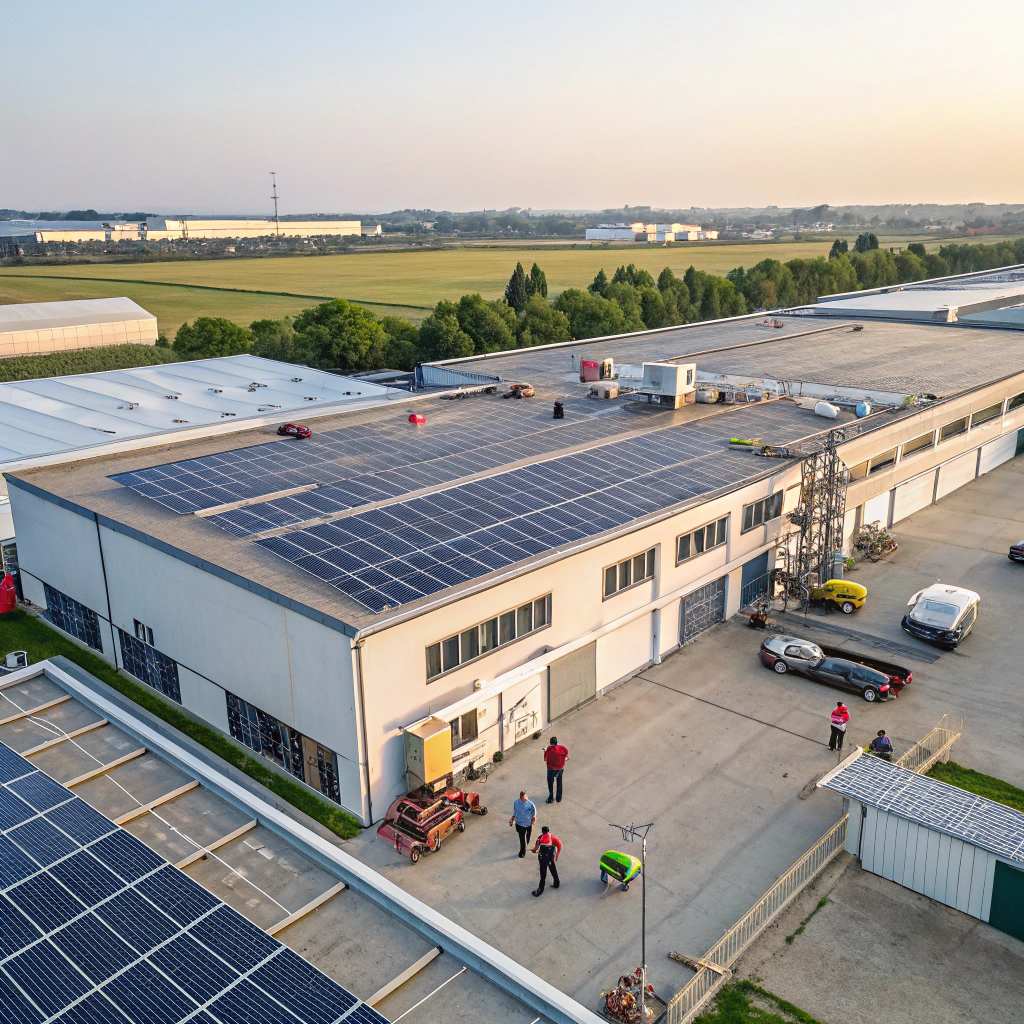
That massive roof above your production floor isn't just protection—it's untapped real estate worth millions in energy savings2 and revenue generation.
Factory rooftops offer 10,000+ square feet of prime solar real estate, generating 500kW-2MW of clean power while creating new revenue streams through energy sales and tax incentives.
Maximizing Your Factory's Solar Potential
I've walked countless factory floors, and one thing always strikes me—the sheer expanse of unused roof space. It's like having a goldmine sitting right above your head. Most manufacturing facilities have 50,000 to 200,000 square feet of roof space, perfect for solar installations3 that can generate substantial power.
The math is compelling. A typical 100,000 square foot factory roof can accommodate a 1-2 MW solar system, generating enough electricity to power hundreds of homes. But here's the kicker—your factory gets first dibs on every kilowatt produced.
Think of your roof as prime real estate in the energy market. Unlike residential properties, industrial roofs offer:
- Minimal shading from surrounding structures
- High electrical demand during peak sun hours
- Existing electrical infrastructure for easy grid connection
- Economies of scale that dramatically reduce per-watt costs
| Factory Size | Roof Space | Solar Capacity | Annual Generation |
|---|---|---|---|
| Small (50k sq ft) | 40k usable | 500kW | 750,000 kWh |
| Medium (100k sq ft) | 80k usable | 1MW | 1,500,000 kWh |
| Large (200k sq ft) | 160k usable | 2MW | 3,000,000 kWh |
Creating Multiple Revenue Streams
Here's where it gets exciting—solar isn't just about cutting your electric bill. Smart manufacturers are creating multiple income sources from their solar investments. Net metering allows you to sell excess power back to the grid during low-production periods. Some facilities generate 20-30% more power than they consume, turning their roof into a revenue-generating asset.
I've seen factories negotiate power purchase agreements4 with neighboring businesses, essentially becoming their own utility company. One textile manufacturer I worked with now supplies clean energy to three adjacent facilities, creating a steady income stream that wasn't imaginable five years ago.
Stop Paying the Grid Premium: Unlock Energy Independence & Predictable Costs with Factory Solar?
Every month, you're essentially writing blank checks to utility companies whose rates keep climbing. Energy independence means predictable costs and protection from volatile markets.
Solar installations provide 25-year energy price stability, protecting manufacturers from utility rate increases that average 2-3% annually while delivering immediate 15-25% cost reductions.
Breaking Free from Utility Rate Volatility
I remember talking to a plastics manufacturer who was getting hammered by demand charges—those sneaky peak usage fees that can double your electric bill during high-production periods. His monthly energy costs were swinging between $15,000 and $35,000, making budgeting a nightmare.
After installing a 750kW solar array, his story completely changed. Not only did his average monthly bill drop to under $8,000, but the predictability allowed him to bid more competitively on contracts. He knew exactly what his energy costs would be for the next 25 years.
The grid premium is real—utilities charge industrial customers complex rate structures including:
- Peak demand charges (can be $10-20 per kW)
- Time-of-use rates (higher during business hours)
- Power factor penalties
- Grid connection fees
Solar eliminates most of these charges by generating power right where you use it.
Long-term Cost Predictability
Think about this: your mortgage payment doesn't increase every year, so why should your energy costs? Solar financing works similarly—fixed monthly payments that often cost less than your current utility bill, with the added benefit of eventual ownership.
| Year | Grid Costs (3% annual increase) | Solar + Grid | Annual Savings |
|---|---|---|---|
| 1 | $120,000 | $72,000 | $48,000 |
| 5 | $135,000 | $75,000 | $60,000 |
| 10 | $161,000 | $80,000 | $81,000 |
| 15 | $187,000 | $85,000 | $102,000 |
| 20 | $217,000 | $90,000 | $127,000 |
The numbers don't lie. While utility rates climb steadily, your solar costs remain predictable and eventually drop to nearly zero once the system is paid off.
Your Factory's Next Big Investment: Calculate the ROI of Solar Power & Boost Your Bottom Line?
Smart manufacturers view solar as equipment that pays for itself while improving operations. The ROI often exceeds traditional factory investments like new machinery or facility expansions.
Factory solar installations typically deliver 15-25% annual returns through energy savings, tax incentives, and depreciation benefits5, with payback periods of 4-7 years on 25-year systems.
The True ROI Calculation
Let me break down the real numbers, because solar ROI goes far beyond simple energy savings. I've helped dozens of manufacturers run these calculations, and the results consistently surprise even the most conservative CFOs.
Direct savings are just the beginning. A typical 1MW factory installation saves $150,000-200,000 annually in electricity costs. But add in federal tax credits (30%), accelerated depreciation schedules, and state incentives, and your first-year benefits can exceed 40% of the total investment.
Here's what a real ROI analysis looks like:
Initial Investment: $1,000,000 (1MW system) Federal Tax Credit: $300,000 (30%) First-Year Depreciation: $200,000 Annual Energy Savings: $180,000 Net First-Year Benefit: $680,000 Actual Out-of-Pocket: $320,000
Financing Options That Make Sense
The beauty of solar financing is flexibility. Power Purchase Agreements (PPAs) require zero upfront investment—you simply buy the power at a reduced rate. Equipment loans offer ownership with tax benefits. Cash purchases provide maximum long-term returns.
I've seen manufacturers choose different paths based on their financial situation:
- Cash-rich companies: Direct purchase for maximum savings
- Capital-constrained businesses: PPAs for immediate cost reduction
- Growth-focused operations: Loans to preserve cash flow while capturing tax benefits
Competitive Advantages Beyond Savings
Here's what many don't consider—solar provides competitive advantages that extend far beyond energy costs. Your predictable energy expenses allow for more aggressive pricing. Sustainability credentials open doors to contracts with environmentally conscious customers. Energy independence provides operational security during grid disruptions.
One automotive parts supplier I worked with landed a major contract specifically because their solar installation demonstrated long-term commitment to sustainability. The contract value exceeded their total solar investment by 300%.
Conclusion
Leading factories are leveraging solar to slash energy costs, create predictable expenses, and generate competitive advantages that leave traditional manufacturers struggling to keep pace.
Understanding energy cost trends can help you strategize your factory's energy management. ↩
Discover the potential savings your factory can achieve through solar energy. ↩
Explore the financial benefits of solar installations to see how they can transform your factory's bottom line. ↩
Learn about PPAs and how they can facilitate your factory's transition to solar energy. ↩
Learn how depreciation can enhance your factory's financial returns from solar. ↩