Future-Proof Your Infrastructure: Why Solar Street Lights Are the Smart Choice for Modern Development?
Tired of rising electricity bills and frequent power outages affecting your outdoor lighting? Solar street lights1 offer a reliable, cost-effective solution for modern infrastructure.
Solar street lights are the smart choice for modern development because they provide energy independence2, require minimal maintenance, offer long-term cost savings3, and ensure continuous illumination during grid failures while supporting sustainable infrastructure goals.
As cities worldwide embrace sustainable development, the shift toward renewable energy solutions has never been more critical. Solar street lights represent a paradigm shift in urban planning, offering developers and municipalities a future-proof lighting solution that combines economic benefits with environmental responsibility. Let's explore why these innovative systems are transforming modern infrastructure.
Set It and Forget It: How Do Solar Street Lights Ensure Hassle-Free Operation?
Ever wished for lighting that works perfectly without constant maintenance headaches?
Solar street lights ensure hassle-free operation through advanced LED technology, intelligent battery management systems, and weather-resistant design4s that require minimal maintenance while providing decades of reliable service.
Advanced Battery Management Systems
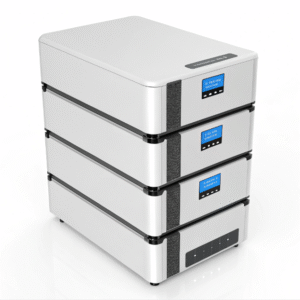
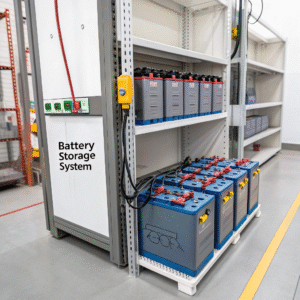
Modern solar street lights feature sophisticated battery management systems that automatically regulate charging and discharging cycles. These systems prevent overcharging during sunny days and ensure optimal power distribution during nighttime operation. The lithium-ion batteries used in premium systems can last 8-10 years with minimal degradation, significantly reducing replacement costs.
Smart controllers monitor battery health continuously, adjusting performance parameters to maximize lifespan. Temperature compensation features ensure consistent operation in extreme weather conditions, while built-in diagnostics provide early warning of potential issues.
Self-Monitoring Technology
Today's solar street lights incorporate IoT connectivity and smart monitoring capabilities that revolutionize maintenance approaches. Remote monitoring systems track performance metrics in real-time, identifying issues before they become problems.
| Feature | Benefit |
|---|---|
| Remote diagnostics | Predictive maintenance scheduling |
| Performance analytics | Optimized energy usage |
| Fault detection | Reduced downtime |
| Wireless connectivity | Central monitoring dashboard |
Weather-Resistant Design
Engineering innovations have created solar street lights capable of withstanding harsh environmental conditions. IP65-rated enclosures protect sensitive components from dust and water ingress, while corrosion-resistant materials ensure longevity in coastal or industrial environments.
From Pathways to Parking Lots: How Versatile Are Solar Street Lights for Different Applications?
Wondering if solar lighting can handle your specific outdoor space requirements?
Solar street lights are extremely versatile, adapting to various applications from residential pathways to large parking lots through scalable designs, adjustable mounting options, and customizable lighting patterns that suit any outdoor space.
Scalable Lighting Solutions
The beauty of solar street lighting lies in its modular scalability. Small residential pathways can utilize compact 20-30W systems, while large parking lots may require powerful 100-200W installations. The technology adapts seamlessly to space requirements without complex electrical infrastructure.
Solar street lights come in various configurations:
- Pathway lights: 10-30W for pedestrian areas
- Street lighting: 40-80W for residential roads
- Highway lighting: 100-200W for major thoroughfares
- Area lighting: 150-300W for parking lots and industrial zones
Flexible Installation Options
Unlike traditional street lights requiring extensive trenching and electrical work, solar systems offer unprecedented installation flexibility. They can be mounted on existing poles, installed as standalone units, or integrated into architectural features.
| Installation Type | Application | Benefits |
|---|---|---|
| Pole-mounted | Streets and walkways | Standard installation |
| Wall-mounted | Building perimeters | Space-saving design |
| Ground-mounted | Open areas | Easy maintenance access |
| Integrated design | Smart city infrastructure | Aesthetic integration |
Customizable Light Distribution
Advanced optical designs allow solar street lights to provide precise light distribution patterns. Wide-beam optics illuminate large areas like parking lots, while focused beams work perfectly for narrow pathways. Programmable dimming schedules optimize energy usage while maintaining safety standards.
No More Power Outage Worries: How Do Solar Street Lights Ensure Continuous Operation During Grid Failures?
Frustrated by lighting failures during power outages when you need illumination most?
Solar street lights ensure continuous operation during grid failures through independent energy storage systems, backup battery reserves, and smart power management that maintains illumination for multiple days without grid electricity.
Energy Independence and Reliability
Solar street lights operate completely independently from the electrical grid, making them immune to power outages, voltage fluctuations, and grid failures. Each unit functions as a self-contained power system, generating, storing, and consuming energy autonomously.
During extended cloudy periods, quality solar street lights maintain operation for 5-7 days without sunlight, thanks to oversized battery banks and intelligent power management. This reliability proves invaluable during natural disasters or emergency situations when traditional lighting fails.
Backup Power Strategies
Premium solar street light systems incorporate multiple backup strategies to ensure uninterrupted operation:
Primary Backup: Oversized battery capacity stores 3-5 days of operational power Secondary Backup: Reduced-brightness emergency mode extends operation time Tertiary Backup: Motion sensor activation conserves power for critical situations
Emergency Response Capabilities
During emergencies, solar street lights become critical infrastructure elements. Many systems include emergency features such as:
- Increased brightness during crisis situations
- Communication capabilities for emergency services
- USB charging ports for mobile devices
- Integration with emergency alert systems
| Emergency Feature | Function | Benefit |
|---|---|---|
| Crisis mode | Maximum brightness | Enhanced visibility |
| Communication hub | WiFi/cellular connectivity | Emergency coordination |
| Device charging | USB ports | Public safety support |
| Alert integration | Emergency broadcasts | Community information |
Conclusion
Solar street lights represent the future of outdoor illumination, combining energy independence2, minimal maintenance, versatility, and grid-failure protection for truly smart infrastructure development.
Discover how solar street lights can enhance urban infrastructure and reduce energy costs. ↩
Learn about the advantages of energy independence in modern lighting solutions. ↩
Find out how solar street lights can save money over time compared to traditional lighting. ↩
Explore the engineering innovations that ensure durability in harsh conditions. ↩