Guard Your Data Fortress: Why a Robust UPS Battery System is Non-Negotiable for Business Continuity?
Power outages can strike without warning, crippling operations and risking data loss. Is your business prepared to weather the storm?
A robust UPS battery system is essential for business continuity as it provides uninterrupted power during outages, protects critical data, and prevents costly downtime, ensuring seamless operations.

In today's digital-first world, even a brief power interruption can have devastating consequences. Let's explore why investing in a reliable UPS battery system1 isn't just smart - it's absolutely critical for your business survival.
Peak Performance, Uninterrupted: The Role of Advanced UPS Battery Systems in IT Infrastructure?
What happens when your servers go dark during a crucial system update or data transfer?
Advanced UPS battery systems maintain IT infrastructure performance by bridging power gaps, allowing safe system shutdowns, and protecting sensitive equipment from power surges that can cause irreversible damage.
Understanding UPS Battery System Capabilities
Modern UPS systems do much more than just provide backup power. They actively condition incoming power to protect your equipment:
- Voltage Regulation: Corrects under/over voltage before it reaches equipment
- Surge Protection: Absorbs power spikes from lightning or grid fluctuations
- Frequency Stabilization: Maintains consistent power frequency for sensitive electronics
| Feature | Benefit | Criticality |
|---|---|---|
| Automatic Voltage Regulation | Protects against brownouts | High |
| Pure Sine Wave Output | Safe for sensitive electronics | Essential |
| Scalable Runtime | Grows with your needs | Medium |
The right UPS system acts as both a safety net and performance enhancer for your IT infrastructure. Learn more about power protection1
UPS Battery Systems Buyer's Guide: Navigating VRLA vs. Lithium-Ion2 for Your Specific Needs?
Choosing between VRLA and lithium-ion UPS batteries feels like comparing apples to oranges - both have sweet spots, but which is right for you?
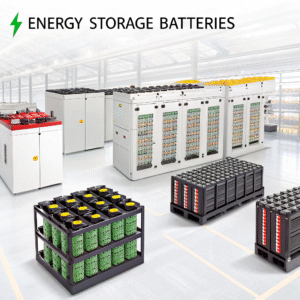
VRLA batteries offer lower upfront costs and proven reliability for standard applications, while lithium-ion provides longer lifespan, faster recharge, and better performance in extreme conditions, albeit at higher initial investment.
Breaking Down the Battery Technologies
Let's examine the key differences that impact your decision:
VRLA (Valve-Regulated Lead-Acid) Batteries:
- Typical lifespan: 3-5 years
- Maintenance: Minimal (sealed design)
- Temperature sensitivity: Performance drops below 20°C/above 25°C
- Best for: Budget-conscious operations with stable environments
Lithium-Ion Batteries:
- Typical lifespan: 8-10 years
- Maintenance: Virtually none
- Temperature range: Operates well from -20°C to 60°C
- Best for: Mission-critical applications where space/weight matter
Cost Comparison Over 10 Years:
| Factor | VRLA | Lithium-Ion |
|---|---|---|
| Initial Cost | $ | $$$$ |
| Replacement Cycles | 2-3 | 0-1 |
| Energy Efficiency | 80-85% | 95%+ |
| Total Cost of Ownership | $$ | $$$ |
The choice ultimately depends on your specific power needs, budget, and operational requirements. Detailed battery comparison2
Future-Proof Your Power: Integrating Smart UPS Battery Systems for Enhanced Monitoring & Management?
Imagine knowing your battery health in real-time and predicting failures before they occur - welcome to smart UPS monitoring3.
Smart UPS systems provide real-time monitoring, predictive analytics4, and remote management capabilities, transforming power protection from reactive to proactive while optimizing battery performance and lifespan.
The Intelligent UPS Revolution
Modern smart UPS systems offer game-changing features:
- Cloud Connectivity: Monitor systems from anywhere via web/mobile apps
- Predictive Analytics: AI algorithms forecast battery degradation
- Automated Reporting: Generate compliance and maintenance reports
- Integration Capabilities: Connect with DCIM and other management systems
Implementation Roadmap:
- Assess current infrastructure and pain points
- Select compatible smart UPS solutions
- Train staff on monitoring platforms
- Establish alert thresholds and response protocols
- Continuously analyze data to optimize performance
By embracing smart UPS technology, businesses gain unprecedented visibility and control over their power protection infrastructure. Smart UPS implementation guide3
Conclusion
Investing in the right UPS battery system safeguards operations, protects data, and ensures business continuity5 in our power-dependent digital landscape.
- Comprehensive guide to power protection strategies for modern businesses [↩]
- Technical comparison of battery technologies for UPS applications [↩]
- Step-by-step guide to implementing smart UPS monitoring systems [↩]
Understanding UPS battery systems is crucial for ensuring business continuity during power outages. ↩
Understanding the differences can help you choose the right battery technology for your needs. ↩
Find out how smart UPS monitoring can enhance your power protection strategy. ↩
Explore how predictive analytics can help in forecasting battery performance and preventing failures. ↩
Explore how effective business continuity planning can safeguard your operations against unexpected disruptions. ↩