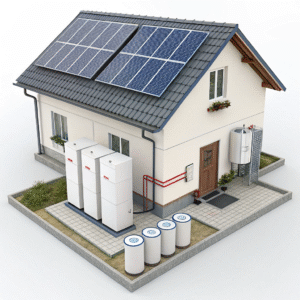
How Storage Batteries Adapt to Harsh Environments in Cold Regions?
Ever struggled with battery failure in freezing temperatures? You're not alone - cold weather can slash battery performance by up to 50%.
Storage batteries adapt to cold regions through specialized thermal management systems, cold-resistant materials, and adaptive charging algorithms that maintain optimal performance even in sub-zero conditions.
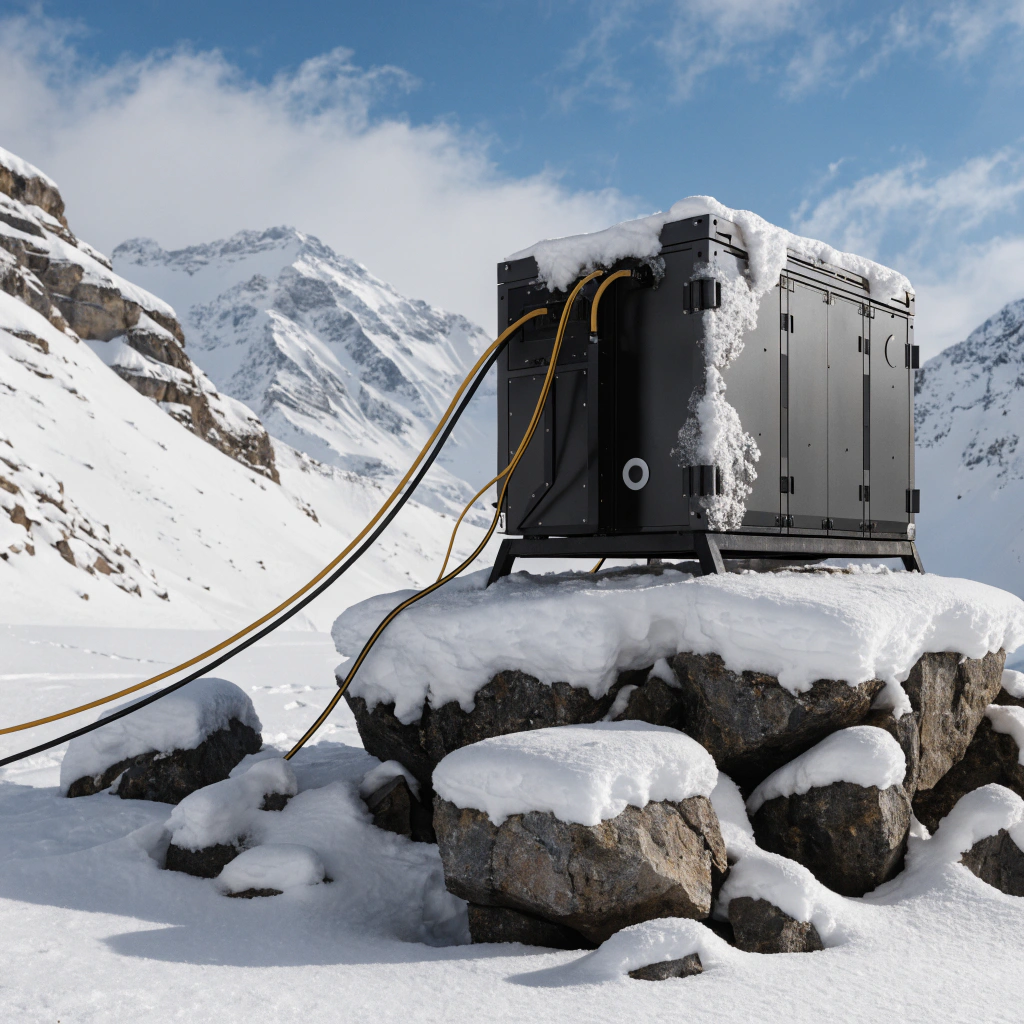
While most batteries struggle below freezing, modern solutions have cracked the code for reliable cold-weather operation. Let's explore how these technologies work together to conquer winter's challenges.
Key Performance Requirements for Storage Batteries in Cold Regions?
Why do standard batteries fail when the mercury drops? The answer lies in fundamental chemistry challenges.
Batteries for cold regions must maintain: 1) High energy density at low temperatures 2) Rapid charge/discharge capability 3) Thermal self-heating mechanisms 4) Robust mechanical structure to withstand thermal contraction.
Critical Cold-Weather Battery Specifications
| Requirement | Standard Battery | Cold-Weather Battery |
|---|---|---|
| Operating Range | 0°C to 45°C | -40°C to 60°C |
| Capacity Retention | <50% at -20°C | >80% at -30°C |
| Charge Acceptance | Poor below 0°C | Maintained to -30°C |
| Cycle Life | 500-1000 | 1500+ |
Advanced solutions employ:
- Phase change materials that absorb/release heat
- Nanostructured anodes that resist lithium plating
- Asymmetric heating that warms cells evenly
- Dynamic electrolyte formulations that maintain ionic conductivity
How to Choose Cold-Resistant Storage Batteries: Preventing Low Temperatures from Affecting Efficiency?
Facing battery anxiety in winter? The right technology makes all the difference.
Select batteries with: 1) Built-in heating systems 2) Low-temperature electrolytes 3) Advanced battery management systems (BMS) 4) Insulated enclosures 5) High C-rate capability for cold starts.
[image placeholder: Side-by-side battery types in cold chamber]
Cold-Resistant Battery Comparison Guide
Lithium Iron Phosphate (LFP)
- Pros: Excellent safety, long lifespan
- Cons: Lower energy density
- Cold Performance: ★★★☆
Lithium Nickel Manganese Cobalt (NMC)
- Pros: High energy density
- Cons: More sensitive to cold
- Cold Performance: ★★☆☆
Lithium Titanate (LTO)
- Pros: Extreme temperature tolerance
- Cons: Higher cost
- Cold Performance: ★★★★
Solid-State (Emerging)
- Pros: No liquid electrolyte
- Cons: Early development
- Cold Performance: ★★★★★
Key selection criteria:
- Minimum operating temperature
- Self-heating capability
- Charge/discharge curves at target temperatures
- Thermal runaway protection
Thermal Control Technology for Storage Batteries: Ensuring Stable Operation in Cold Conditions?
How do cutting-edge batteries stay warm when everything else freezes? The answer lies in smart thermal engineering.
Modern thermal management systems use: 1) Phase change materials 2) Self-heating electrodes 3) AI-powered temperature regulation 4) Multi-layer insulation 5) Directional heating circuits that target cell cores.
Advanced Thermal Management Approaches
Passive Systems:
- Phase change materials (PCM)
- Aerogel insulation
- Thermal interface materials
Active Systems:
- Liquid heating/cooling loops
- PTC (Positive Temperature Coefficient) heaters
- Bidirectional thermal pumps
Smart Control:
- Predictive heating algorithms
- Cell-level temperature monitoring
- Adaptive charging profiles
Implementation Example:
- Pre-heat to -10°C before charging
- Maintain 15-25°C during operation
- Gradual cooldown protocol
- Insulated storage when idle
Conclusion
Modern cold-weather batteries combine advanced chemistry, intelligent thermal management, and robust construction to deliver reliable performance even in extreme winter conditions.