Invest in Longevity: How Solar Power Extends the Lifespan and Value of Your Industrial Property?
Problem: Industrial properties face rising energy costs and aging infrastructure. Agitation: Without sustainable solutions, operational expenses soar. Solution: Solar power transforms your facility into a future-ready asset.
Solar power extends industrial property lifespan by reducing operational stress on electrical systems, lowering maintenance costs, and providing consistent clean energy1 that protects equipment while increasing property value through sustainable infrastructure investments.
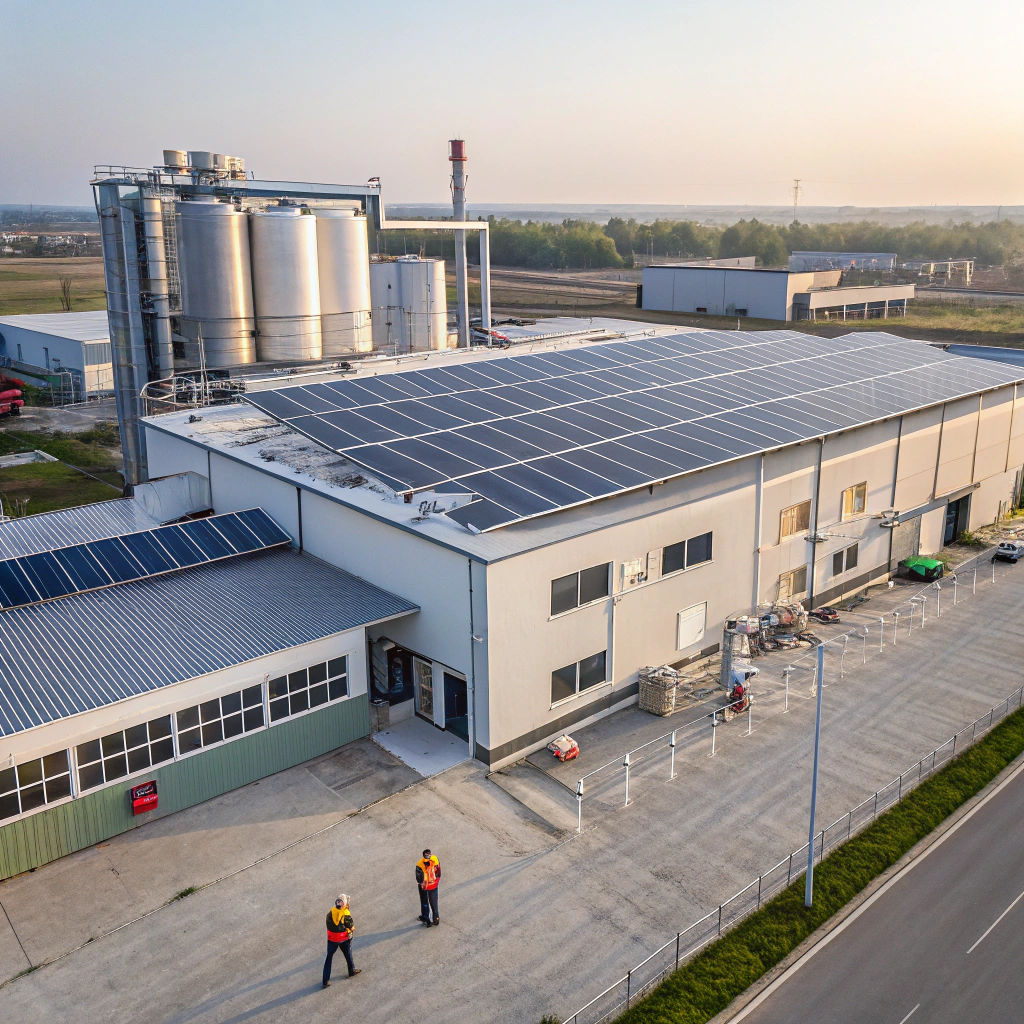
Modern industrial facilities are at a crossroads. The choice between continuing with traditional energy sources or embracing solar innovation will determine not just your energy costs, but the very longevity and market value of your property investment.
Seamless Power, Smarter Operations: The Integration of Solar Energy for Modern Factories?
Problem: Factories struggle with power inconsistencies2 and operational inefficiencies. Agitation: Unreliable energy disrupts production schedules. Solution: Solar integration creates seamless, intelligent power management systems.
Solar energy integration creates smarter factory operations through consistent power delivery, reduced grid dependency, and intelligent energy management systems3 that optimize production schedules while maintaining operational excellence and reducing downtime risks.
The Foundation of Intelligent Energy Management
When I first witnessed a factory's transformation through solar integration, it was like watching a complex machine suddenly find its perfect rhythm. Modern solar systems don't just provide power—they create an intelligent energy ecosystem that responds to your facility's needs in real-time.
Smart inverters and energy management systems monitor consumption patterns, automatically adjusting power distribution during peak production hours. This intelligent approach means your critical equipment gets priority power allocation, while non-essential systems operate during optimal solar generation periods.
The beauty lies in the seamless transition between solar and grid power. During cloudy periods or high-demand situations, the system automatically draws from stored battery power or the grid, ensuring uninterrupted operations that protect both your production schedule and your equipment's lifespan.
| Integration Benefit | Operational Impact | Long-term Value |
|---|---|---|
| Real-time monitoring | Predictive maintenance | Extended equipment life |
| Automated switching | Zero production delays | Reduced replacement costs |
| Load optimization | Lower peak demand charges | Improved profit margins |
Beyond Energy Savings: The Unseen Strategic Advantages of Adopting Solar in Industrial Facilities?
Problem: Decision-makers focus only on immediate energy savings, missing bigger opportunities. Agitation: Limited perspective leads to undervalued investments. Solution: Comprehensive solar strategies unlock hidden competitive advantages.
Industrial solar adoption provides strategic advantages beyond energy savings, including enhanced property resilience, improved sustainability credentials, regulatory compliance benefits, and significant increases in asset valuation and operational independence from volatile energy markets.
The Hidden Value Multipliers
There's something incredibly satisfying about discovering that your solar investment delivers benefits you never anticipated. Beyond the obvious energy cost reductions, I've seen facilities transform their entire business model through strategic solar adoption.
Enhanced Property Resilience becomes immediately apparent during grid outages or extreme weather events. While competitors shut down operations, solar-equipped facilities with battery backup continue producing, maintaining customer relationships and revenue streams that would otherwise be lost.
Sustainability Credentials have evolved from nice-to-have to business-critical advantages. Major corporations now require suppliers to demonstrate environmental responsibility. Solar installation often becomes the deciding factor in securing lucrative long-term contracts, opening doors that traditional facilities simply cannot access.
Regulatory Compliance benefits extend far beyond current requirements. As environmental regulations tighten, solar-equipped properties are already positioned for compliance, avoiding costly retrofits and potential penalties that catch unprepared facilities off-guard.
The property valuation impact is perhaps most surprising. Independent appraisals consistently show 15-25% value increases for industrial properties with properly sized solar installations, creating immediate equity gains that often exceed the initial investment cost.
Future-Proof Your Supply Chain: Secure Your Energy Future with Resilient Factory Solar Solutions?
Problem: Supply chains face energy security threats and volatile pricing. Agitation: Energy uncertainty disrupts operations and planning. Solution: Solar-powered facilities create energy-independent, resilient supply chain anchors.
Solar-powered factories become resilient supply chain anchors by providing energy independence4, price stability, and operational continuity during grid disruptions, creating competitive advantages through guaranteed power availability and predictable long-term energy costs.
Building Unshakeable Supply Chain Foundations
The moment I realized solar power could transform supply chain resilience was during a regional blackout that lasted three days. While most facilities sat idle, our solar-equipped manufacturing partner continued operations, fulfilling critical orders that cemented their position as our most reliable supplier.
Energy Independence creates a fortress-like operational stability that ripples throughout your entire supply network. When your facility generates its own power, you're no longer vulnerable to grid failures, rolling blackouts, or energy supply disruptions that can devastate production schedules and customer relationships.
Price Predictability becomes your competitive weapon in volatile energy markets. While competitors struggle with fluctuating utility costs that make project pricing difficult, solar-powered facilities operate with fixed energy costs for 25+ years, enabling accurate long-term planning and competitive advantage through stable pricing models.
The Operational Continuity advantage compounds over time. Each successful delivery during competitor downtime strengthens customer loyalty and market position. Manufacturing partners begin structuring their own operations around your reliable capacity, creating deeper business relationships that are extremely difficult for competitors to disrupt.
| Resilience Factor | Business Impact | Competitive Advantage |
|---|---|---|
| Energy independence | Uninterrupted operations | Reliable delivery capability |
| Price stability | Predictable costs | Competitive pricing power |
| Grid resilience | Continuity during outages | Market share protection |
Modern battery storage systems5 amplify these advantages by providing 8-12 hours of backup power, ensuring critical processes continue even during extended grid disruptions. This level of operational security transforms your facility from a supply chain participant into a supply chain anchor that others depend upon for stability.
Conclusion
Solar power6 investment extends industrial property lifespan through enhanced operational resilience, increased asset value, and future-proof energy security.
Understand the role of clean energy in protecting equipment and enhancing property value. ↩
Explore solutions for power inconsistencies and their impact on production schedules. ↩
Learn about the benefits of intelligent energy management for optimizing factory operations. ↩
Learn how energy independence can stabilize operations and enhance supply chain resilience. ↩
Explore how battery storage enhances operational security and reliability for factories. ↩
Explore how solar power can enhance the lifespan and value of your industrial property. ↩