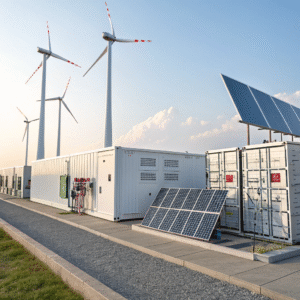
Key Technology Breakthroughs That Make Energy Storage More Powerful?
Energy storage is evolving rapidly, but what are the breakthroughs making batteries more powerful and efficient than ever before?
Key technology breakthroughs in energy storage include higher energy density, smart monitoring systems, and advanced materials, enabling more powerful, efficient, and longer-lasting batteries for various applications.
The race for better energy storage is accelerating, with innovations that promise to revolutionize how we store and use power. Let’s dive into the breakthroughs reshaping the industry.
Higher Energy Density: Packing More Power into One Battery?
What if your phone battery lasted a week or your electric car drove 500 miles on a single charge?
Higher energy density1 allows batteries to store more power in the same or smaller space, achieved through advanced materials like silicon anodes and solid-state electrolytes, significantly boosting performance.
The Science Behind Energy Density
Energy density measures how much power a battery can hold relative to its size or weight. Recent advancements focus on:
- Silicon Anodes2: Replacing graphite with silicon increases capacity by up to 10x but requires managing expansion issues.
- Solid-State Batteries3: Eliminating liquid electrolytes improves safety and energy density while reducing overheating risks.
- Lithium-Sulfur (Li-S): Offers higher theoretical energy density than lithium-ion but faces cycle-life challenges.
| Technology | Energy Density (Wh/kg) | Advantages |
|---|---|---|
| Traditional Li-ion | 250-300 | Proven, reliable |
| Silicon Anodes2 | 350-400 | Higher capacity |
| Solid-State | 400-500+ | Safer, longer lifespan |
Real-World Impact
Companies like Tesla and QuantumScape are pushing solid-state batteries, while startups like Sila Nano are commercializing silicon anodes. These innovations could mean:
- EVs with 500+ mile ranges
- Smartphones with multi-day battery life
- Grid storage that’s cheaper and more compact
Smart Monitoring Systems: Managing Every Watt Efficiently?
What if your battery could predict failures before they happen?
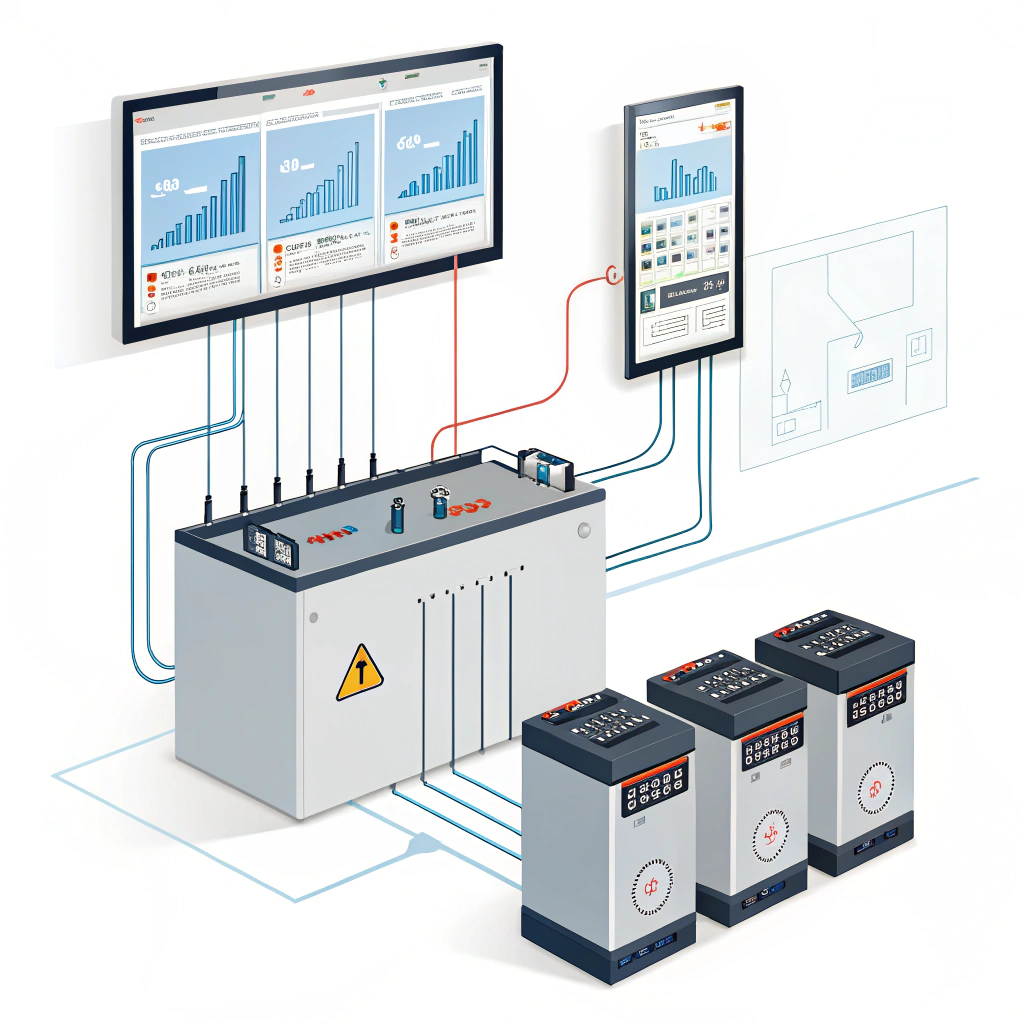
Smart monitoring systems[^4] use AI and IoT sensors to optimize battery performance, predict failures, and extend lifespan by analyzing real-time data on temperature, voltage, and usage patterns.
How Smart Systems Work
- Predictive Analytics[^5]: AI detects subtle changes in performance to flag degradation early.
- Dynamic Load Balancing: Distributes energy draw evenly across cells to prevent hotspots.
- Remote Diagnostics: Enables proactive maintenance, reducing downtime.
Applications
- Electric Vehicles: Prevents battery fires and optimizes charging cycles.
- Renewable Energy Storage: Maximizes solar/wind power utilization.
- Consumer Electronics: Extends battery lifespan in phones and laptops.
The Future of Energy Storage: Lighter, Faster, and Smarter?
Imagine charging your EV in 5 minutes or a battery that never degrades.
The future of energy storage lies in ultra-fast charging, self-healing materials, and bio-inspired designs, making batteries lighter, more durable, and seamlessly integrated into daily life.
Emerging Trends
- Graphene Batteries[^6]: Charge 5x faster and last longer.
- Self-Healing Materials[^7]: Repair micro-cracks automatically.
- Hybrid Systems[^8]: Combine supercapacitors with batteries for instant power bursts.
Challenges Ahead
- Cost: Scaling new tech remains expensive.
- Recycling: Sustainable disposal methods are critical.
- Regulation: Safety standards must evolve with innovation.
Conclusion
Breakthroughs in energy density, smart monitoring, and futuristic materials are making energy storage more powerful, efficient, and indispensable for a sustainable future.
Understanding higher energy density can help you grasp how batteries are evolving to store more power efficiently. ↩
Explore the advantages of silicon anodes and how they significantly enhance battery capacity and performance. ↩
Learn about solid-state batteries, which promise improved safety and energy density over traditional batteries. ↩