MPPT Demystified: How Your Inverter Acts Like a Smart “Hunter” to Capture Every Ray of Light on Cloudy Days
Solar panels produce power, but your inverter determines how much you actually get. On cloudy days, this becomes critical.
MPPT technology1 enables inverters to continuously track and harvest maximum available solar energy, even under partial shading or cloud cover, by dynamically adjusting voltage and current parameters for optimal power transfer.
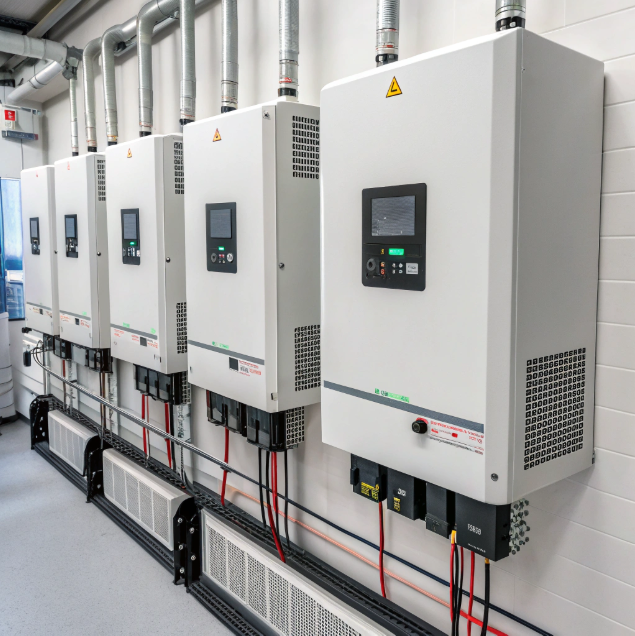
Think of your inverter as an intelligent energy hunter rather than just a converter. Let's explore how this smart technology works to squeeze every possible watt from your solar array.
The Brain of a PV Project: Why Your Choice of Inverter Matters More Than Your Panels?
Ever wonder why two identical solar systems can produce dramatically different energy yields?
Inverter selection often outweighs panel choice because MPPT efficiency, voltage range, and response time directly determine how much generated power actually reaches your home or grid.
Understanding MPPT's Role in System Performance
Maximum Power Point Tracking isn't just a feature—it's the core intelligence of your solar system. Traditional inverters operate at fixed voltages, but MPPT inverters constantly scan the IV curve to find the sweet spot where voltage and current multiply to deliver maximum watts.
During cloud cover, solar panel output becomes unstable as light intensity fluctuates. Basic inverters might settle at suboptimal operating points, but advanced MPPT algorithms can capture up to 30% more energy during these challenging conditions. The technology works by:
- Continuous scanning: Sampling hundreds of operating points per second
- Dynamic adjustment: Modifying impedance to match panel characteristics
- Rapid response: Adapting to changing conditions within milliseconds
| MPPT Feature | Performance Impact | Cloudy Day Benefit |
|---|---|---|
| Tracking Efficiency | 99.5% vs 95% | Captures marginal power differences |
| Voltage Range | 80-600V vs narrow range | Maintains operation during voltage dips |
| Scan Frequency | 100+ times/sec vs occasional | Faster adaptation to moving clouds |
Beyond Basic Tracking: Advanced MPPT Strategies
Modern inverters employ sophisticated techniques like multi-peak tracking2 that can identify multiple maximum power points when panels experience different shading conditions. This prevents the "Christmas light effect" where one shaded panel drags down entire string performance. The best inverters combine hardware precision with intelligent software that learns your system's behavior patterns over time.
String Inverters vs. Microinverters: A Head-to-Head Analysis of True Cost & Efficiency for Installers
Choosing between string and microinverters3? The decision impacts everything from installation to long-term performance.
Microinverters optimize each panel individually, outperforming string inverters in shaded or complex roof scenarios, though at higher initial cost with different maintenance considerations.
Performance Under Real-World Conditions
The theoretical efficiency numbers on spec sheets rarely tell the full story. String inverters typically show excellent laboratory efficiency (98%+) but can suffer significant real-world losses when panels are partially shaded or mismatched. Microinverters maintain peak performance panel-by-panel, but introduce complexity with more components and potential failure points.
I've installed both systems and witnessed how microinverters can maintain 95% of potential output while string systems might drop to 70% during morning/evening shading. The performance gap widens when:
- Roofs have multiple orientations
- Trees or structures create moving shadows
- Panels age at different rates
- System expansion is anticipated
Total Cost of Ownership Analysis
The upfront price difference is obvious, but the true cost picture emerges when considering installation time, maintenance accessibility, and energy production4 over the system's lifetime.
| Factor | String Inverters | Microinverters |
|---|---|---|
| Initial Cost | $0.10-$0.20/watt | $0.25-$0.40/watt |
| Shading Performance | 70-90% of potential | 90-98% of potential |
| Maintenance Access | Centralized location | Rooftop access required |
| Failure Impact | Entire system down | Single panel affected |
Installation and Scalability Considerations
String systems shine in large, unshaded commercial installations where simplicity and centralized maintenance offer advantages. Microinverters dominate residential markets with complex roof lines and shading challenges. The right choice depends on specific site conditions and customer priorities rather than blanket recommendations.
What Happens When an Inverter "Overheats"? A Look Inside the Thermal Design and Engineering Art of a Top-Tier Inverter
That temperature warning light isn't just an annoyance—it's costing you real energy production.
Inverter overheating triggers protective power reduction, decreasing output by 10-50% while risking component degradation, making thermal management crucial for reliability and long-term performance.
The Thermal Domino Effect
Heat is the silent killer of electronic components. When inverters overheat, they don't just shut down—they enter derating mode, gradually reducing output to prevent damage. This happens most frequently during peak summer production when you need power most.
Quality thermal design involves multiple strategies working together:
- Heat sink geometry: Advanced fin designs that maximize surface area
- Component placement: Strategic positioning of heat-generating elements
- Active vs passive cooling: Balancing reliability against complexity
- Material selection: Using substrates with optimal thermal conductivity
Engineering Solutions for Heat Management
Top-tier inverters incorporate sophisticated cooling systems that maintain optimal temperatures even in extreme conditions. I've seen cheap inverters lose 30% output on hot days while premium models maintained full power. The difference comes down to:
Passive Cooling Excellence
- Extruded aluminum heat sinks with optimized fin density
- Thermal interface materials with high conductivity
- Ventilation paths designed for natural convection
Smart Thermal Management
- Temperature-based fan speed control
- Predictive derating based on thermal modeling
- Component-level thermal protection
Real-World Impact and Prevention
Overheating doesn't just cause temporary power loss—it accelerates component aging, leading to premature failure. Proper installation spacing, adequate ventilation, and regular maintenance cleaning can prevent most overheating issues, but the fundamental thermal design determines the inverter's resilience.
Conclusion
Your inverter's MPPT intelligence transforms solar potential into actual power, making technology selection critical for maximizing energy harvest under all conditions.
Understanding MPPT technology is crucial for optimizing solar energy capture, especially in varying weather conditions. ↩
Explore how multi-peak tracking improves energy capture in shaded conditions, maximizing output. ↩
Microinverters offer unique benefits for complex installations, ensuring optimal performance for each panel. ↩
Explore the various factors that affect energy production to maximize your solar investment. ↩