Power Your Home, Fuel Your Ride: The Dual Advantage of a Storage-Equipped EV Charger
Tired of rising electricity bills and unreliable charging options? What if your EV could power your home during outages while slashing energy costs?
A storage-equipped EV charger stores excess energy to power both your vehicle and home, offering energy independence, cost savings, and backup power during grid failures.
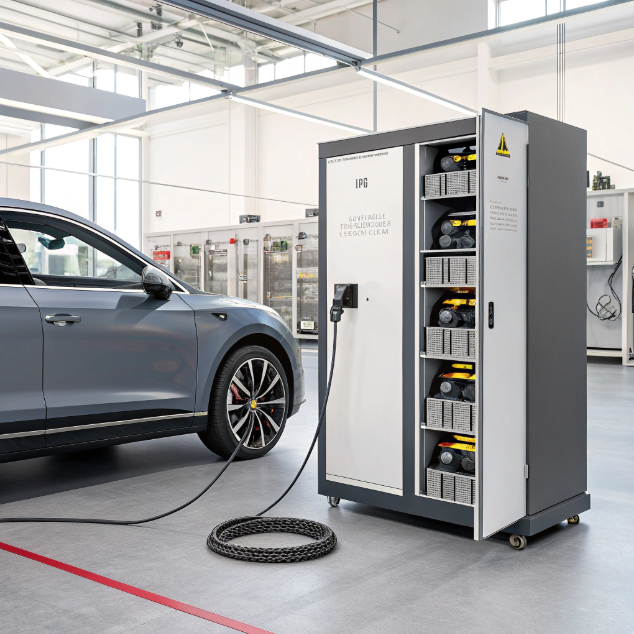
Imagine never worrying about blackouts or peak electricity rates again. With a storage-equipped EV charger1, you can harness solar energy by day and use it to charge your car or power your home at night.
Beyond the Grid: Future-Proofing Your EV Charging with Resilient Home Energy Storage
What happens when the grid goes down? Most EV owners are left stranded—but not you.
Home energy storage paired with EV charging creates a resilient microgrid, ensuring uninterrupted power for both your vehicle and essential home appliances during outages.
How It Works: The Synergy Between Storage and EV Charging
-
Energy Arbitrage
- Store cheap off-peak/solar energy → Use during expensive peak hours
- Typical savings: 30-50% on electricity bills
-
Blackout Protection Scenario Standard EV Charger Storage-Equipped System Grid failure No charging 3-7 days of home power Time-of-use rates Full price Off-peak stored energy -
Solar Optimization
- 60% of solar energy typically goes unused during daytime
- Storage captures excess for nighttime EV charging
Pro Tip: Look for systems with "vehicle-to-home2" (V2H) capability like the Ford F-150 Lightning's 9.6 kW backup power output.
Never Wait for a Charge: On-Demand EV Power from Your Own Home Storage System
Ever faced a drained battery with no charging station in sight? Your home storage becomes your personal energy reserve.
Home battery systems provide instant charging access, eliminating dependency on public infrastructure while optimizing energy use through smart load management.
The Charging Matrix: Storage vs. Grid-Direct
| Feature | Grid-Only Charging | Storage-Buffered Charging |
|---|---|---|
| Charge during outage | ❌ No | ✅ Yes (3-20kWh typical) |
| Peak rate avoidance | ❌ Pays full price | ✅ Uses stored energy |
| Charge speed | Limited by circuit | Boosted by battery buffer |
Key Insight: A 10kWh home battery (like Tesla Powerwall) can deliver ~30 miles of range without grid power—enough for most daily commutes.
Solar-Powered Miles: Maximize Your Home's Renewable Energy for Emission-Free Driving
Why pay for dirty grid energy when your roof can fuel your drives?
Solar-charged EVs reduce fuel costs to $0.02/mile while shrinking your carbon footprint—storage ensures sun-powered driving day and night.
The Solar Charging Flywheel
-
Daytime Generation
- 6kW solar system → 30kWh daily (100 EV miles)
-
Smart Storage
- Prioritize home loads → EV charging → Grid export
-
Financial Payback
- Typical 5-7 year ROI when combining solar + storage + EV charging
Case Study: California homeowner with 8kW solar + 2 Powerwalls eliminates $3,500/year in gas + electricity costs.
Conclusion
Storage-equipped EV chargers transform your vehicle into a mobile power plant—saving money, boosting resilience, and enabling truly green driving.