Power Your Home, Your Way: How Residential Battery Storage Revolutionizes Energy Independence?
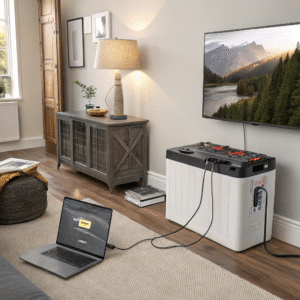
Tired of rising electricity bills and unpredictable power outages? Residential battery storage1 is changing the game for homeowners seeking control over their energy future.
Residential battery storage systems allow homeowners to store solar energy, reduce grid dependence, and maintain power during outages, providing energy independence and significant cost savings.
The energy landscape is shifting rapidly, and residential battery storage sits at the forefront of this transformation. What once seemed like futuristic technology is now empowering homeowners to take charge of their energy consumption like never before.
Optimizing Industrial Operations: The Role of Battery Storage in Peak Shaving and Demand Charge Reduction?
Ever watched your business's energy costs spike during peak hours? Battery storage offers a powerful solution to this costly problem.
Industrial battery storage reduces energy costs through peak shaving2 (storing energy during low-demand periods) and demand charge reduction3 (avoiding peak utility rates), typically delivering ROI within 3-5 years.
Breaking Down Industrial Energy Cost Savings
Understanding Peak Shaving
- Stores energy during off-peak hours (typically nights/weekends)
- Discharges during peak demand (weekday afternoons)
- Can reduce peak demand charges by 20-40%
Demand Charge Reduction Strategies
| Strategy | Implementation | Cost Savings Potential |
|---|---|---|
| Load Shifting | Shift operations to off-peak | 15-25% |
| Peak Clipping | Limit maximum draw from grid | 20-35% |
| Energy Arbitrage | Buy low/sell high pricing | 10-30% |
Advanced systems now incorporate AI-driven predictive analytics4 to optimize charging/discharging cycles based on:
- Weather patterns
- Historical usage data
- Real-time electricity pricing
From Microgrids to Megawatts: Scalable Battery Storage Solutions for Grid Modernization?
What if entire communities could operate independently from the main grid? Battery storage is making microgrids a reality.
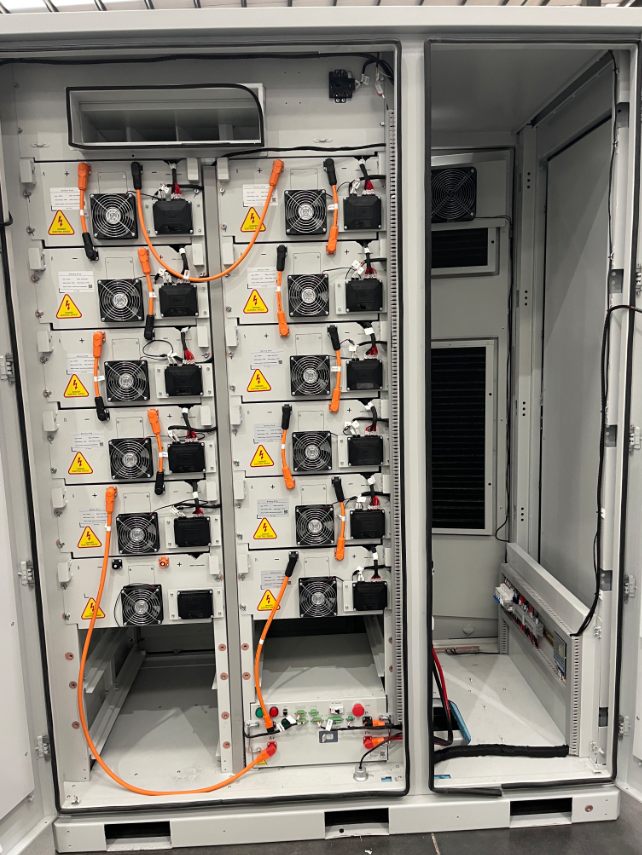
Scalable battery storage enables microgrid development5 by providing flexible capacity (from 10kW to 100MW+), supporting renewable integration, and enhancing grid resilience during natural disasters or outages.
The Architecture of Modern Microgrids
-
Core Components:
- Renewable generation (solar/wind)
- Battery storage systems
- Smart inverters
- Advanced control systems
-
Scalability Factors:
- Modular battery designs
- Stackable architecture
- Plug-and-play integration
Recent advancements include:
- Virtual power plant (VPP) networks
- Blockchain-enabled peer-to-peer trading
- AI-optimized energy dispatch
Beyond Energy: Exploring Innovative Applications of Battery Storage in Disaster Relief and Emergency Response?
When disaster strikes and the grid fails, how can battery storage become a lifeline? The answers might surprise you.
Battery storage systems provide critical emergency power for hospitals, communication networks, and water systems during disasters, with mobile units deploying in under 2 hours to disaster zones.
Disaster Response Capabilities Matrix
| Application | Deployment Time | Duration | Key Benefits |
|---|---|---|---|
| Mobile Charging Stations | <1 hour | 8-72 hours | Communication support |
| Medical Facility Backup | <2 hours | 24-96 hours | Life-saving equipment |
| Water Purification | <4 hours | Continuous | Disease prevention |
| Emergency Lighting | Immediate | 5-7 days | Safety/security |
Emerging technologies include:
- Solar-powered portable batteries
- Drone-delivered micro-units
- Self-healing battery systems
Conclusion
From homes to hospitals, battery storage is revolutionizing how we generate, store, and use energy - creating a more resilient and sustainable future for all.
Explore how residential battery storage can empower homeowners with energy independence and cost savings. ↩
Learn about peak shaving and how it can significantly reduce energy costs for businesses. ↩
Discover strategies for demand charge reduction and how they can enhance your energy efficiency. ↩
Learn how AI-driven predictive analytics optimizes energy storage and usage for better efficiency. ↩
Understand how microgrid development can lead to energy resilience and independence for communities. ↩