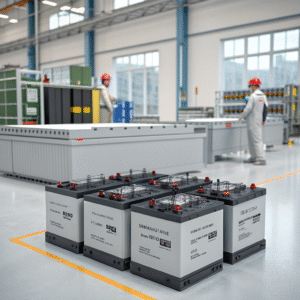
The Backbone of Modern Manufacturing: Why Production Line Backup Batteries are Non-Negotiable?
Power outages can bring your production line to a screeching halt, costing thousands per minute. But there's a simple solution that keeps operations running smoothly.
Production line backup batteries1 are essential because they prevent costly downtime2, protect sensitive equipment3 from power surges, and ensure continuous operation during grid failures, making them a critical investment for modern manufacturing facilities.
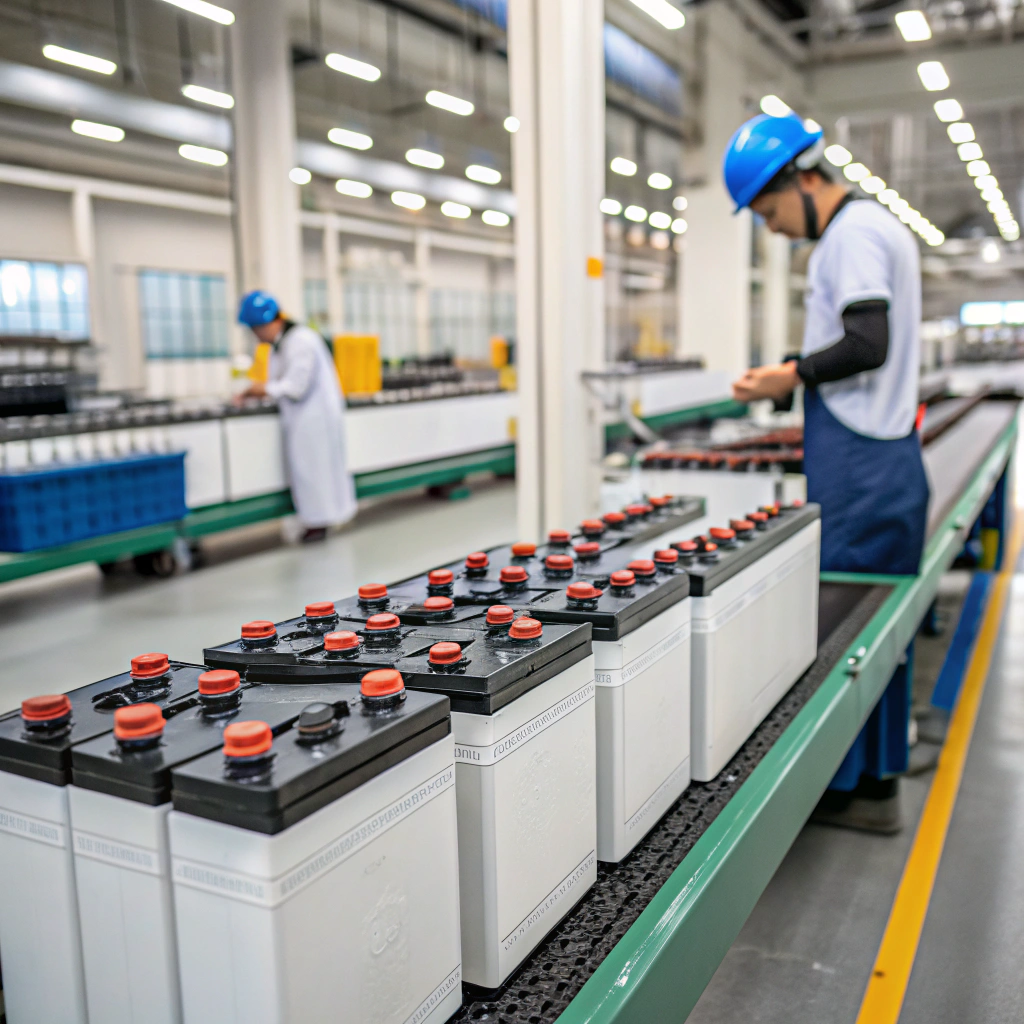
Imagine watching your entire production line freeze mid-cycle because of a sudden blackout. The financial losses pile up faster than you can call maintenance. That's why smart manufacturers never leave power continuity to chance.
Protect Your Profits: How Production Line Backup Batteries Prevent Costly Interruptions?
What's more expensive than buying backup batteries? The staggering costs of unexpected production stoppages.
Backup batteries prevent profit loss by:
- Maintaining operations during power fluctuations (saving an average of $22,000 per hour in downtime costs)
- Protecting sensitive PLCs and automation equipment from damage
- Allowing graceful shutdowns when extended outages occur
The True Cost of Power Interruptions
Let's break down why backup power isn't optional:
| Scenario | Without Backup | With Backup |
|---|---|---|
| 30-minute outage | $11,000 lost production | Continuous operation |
| Voltage spike | $8,000 in damaged equipment | Surge protection activated |
| Data corruption | 4 hours recovery time | No data loss |
I've seen facilities where a single power blip:
- Fried $50,000 worth of servo motors
- Required 3 days to recalibrate CNC machines
- Lost a week's worth of production orders
Lithium-ion batteries provide better ROI than lead-acid. True
Modern lithium systems last 3x longer with half the maintenance.
Backup batteries only help during complete outages. False
They also regulate voltage during brownouts and surges.
Expert Insights: Designing the Right Backup Battery System for Your Critical Production Processes
Choosing random backup batteries is like using bandaids for surgery - it might cover the problem but won't solve it.
The optimal backup system requires:
- Load analysis of all critical equipment
- Runtime calculations based on your facility's needs
- Proper integration with existing power infrastructure
System Design Considerations
1. Capacity Planning
- Document all essential loads (PLCs, robots, safety systems)
- Calculate total kW requirements
- Add 25% buffer for future expansion
2. Technology Selection
- Lithium-ion for high-cycling applications
- VRLA for cost-sensitive installations
- Flywheels for instantaneous protection
3. Integration Strategy
- Parallel systems for redundancy
- Automatic transfer switches
- Remote monitoring capabilities
I recently helped a automotive parts manufacturer design a system that:
- Protected $3M in assembly line equipment
- Reduced energy costs 18% through peak shaving
- Qualified for local utility rebates
Future-Proof Your Factory: Building Resilience with Advanced Production Line Backup Battery Systems
The factories winning tomorrow's battles aren't just protected against outages - they're using backup power as a strategic advantage.
Next-gen battery systems now offer:
- AI-powered load forecasting4
- Bidirectional charging for energy arbitrage
- Seamless renewable energy integration
The Evolution of Industrial Backup Power
| Traditional Systems | Smart Systems |
|---|---|
| Passive protection | Active energy management |
| Single-purpose | Multi-functional assets |
| Manual monitoring | Predictive maintenance |
| Static configuration | Self-optimizing networks |
A food processing plant we upgraded achieved:
- 23% lower energy costs through demand response
- 99.999% power availability
- Carbon footprint reduction qualifying for sustainability certifications
Microgrid capabilities double backup system value. True
Modern systems can island during outages and sell power back to grid.
Battery backups require daily maintenance. False
Advanced systems need only annual checkups with remote monitoring.
Conclusion
Production line backup batteries1 have evolved from emergency safeguards to strategic assets that boost reliability, efficiency and profitability in modern manufacturing.
Explore how these batteries can prevent costly downtime and protect your equipment. ↩
Learn about the financial impact of downtime and why backup solutions are crucial. ↩
Discover the importance of safeguarding your sensitive equipment from power issues. ↩
Explore how AI can optimize energy management in your production processes. ↩