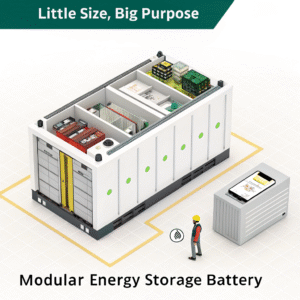
The Economic Advantages of Energy Storage Batteries: How to Benefit from Growing Demand
Struggling to cut energy costs while meeting rising demand? Energy storage batteries1 might be your game-changer.
Energy storage batteries1 reduce operational costs2, stabilize grids, and unlock revenue streams through peak shaving3, demand charge reduction[^4], and participation in energy markets, making them a smart investment for businesses.

The energy landscape is shifting rapidly, and businesses that adapt will thrive. Let’s explore how energy storage batteries can turn challenges into opportunities.
How Do Energy Storage Batteries Reduce Operational Costs and Increase Profits?
Ever wondered how top companies slash energy bills while boosting profitability? The secret lies in energy storage batteries.
Energy storage batteries1 cut costs by storing cheap off-peak energy for use during expensive peak hours, reducing demand charges, and avoiding grid dependency, directly improving profit margins.
Breaking Down the Cost-Saving Mechanisms
-
Peak Shaving & Demand Charge Reduction
- Utilities charge higher rates during peak demand (e.g., hot summer afternoons). Batteries discharge stored energy during these times, lowering demand charges.
- Example: A factory using batteries during peak hours can cut demand charges by 30-50%.
-
Time-of-Use (TOU) Arbitrage[^5]
- Buy low (off-peak), use high (on-peak). Batteries store energy when prices are low (e.g., nighttime) and release it when prices spike.
-
Backup Power[^6] & Grid Independence
- Avoid costly downtime during outages. Critical facilities (hospitals, data centers) use batteries to ensure uninterrupted operations.
| Strategy | Savings Potential | Best For |
|---|---|---|
| Peak Shaving | 30-50% on demand charges | Commercial/Industrial |
| TOU Arbitrage | 20-40% energy cost reduction | Utilities, Large Consumers |
| Backup Power[^6] | Prevents $10k+/hr downtime losses | Critical Infrastructure |
Real-World Applications
- Tesla’s Hornsdale Battery (Australia): Saved $40M in grid stabilization costs in its first year.
- Walmart: Uses batteries to cut energy costs across 1,300+ stores.
By integrating these strategies, businesses can turn energy storage into a profit center.
Energy storage batteries1 can reduce demand charges by up to 50%.
✅ True – By discharging during peak hours, batteries significantly lower demand-based fees.
Batteries are only useful for backup power.
❌ False – They also enable cost savings, revenue generation, and grid services.
How Does the Growing Demand for Energy Storage Batteries Drive Business Expansion?
Why are companies racing to adopt energy storage? Because it’s no longer just an option—it’s a competitive necessity.
The booming demand for energy storage batteries is fueled by renewable integration[^7], grid modernization, and electrification trends, creating opportunities for businesses to expand services, enter new markets, and future-proof operations.
Key Drivers of Demand
-
Renewable Energy Growth
- Solar/wind are intermittent; batteries store excess energy for cloudy/windless periods.
- Stat: Global battery storage for renewables will grow 25% annually through 2030.
-
Electric Vehicles (EVs)[^8] & Charging Infrastructure
- Fast-charging stations require high power draws. Batteries buffer grid strain.
- Opportunity: EV fleet operators use batteries to manage charging costs.
-
Grid Modernization Initiatives[^9]
- Utilities incentivize battery adoption for load balancing and deferred infrastructure upgrades.
Business Expansion Opportunities
- New Revenue Streams: Sell stored energy back to the grid or participate in frequency regulation markets.
- Microgrid Development: Energy-independent campuses (e.g., universities, military bases) leverage batteries for resilience.
- Emerging Markets: Developing countries use batteries to replace diesel generators.
Case Study:
- NextEra Energy built a $100M storage division, capitalizing on utility-scale demand.
Energy storage demand is growing fastest in the EV sector.
✅ True – EVs and charging networks are major growth drivers.
Batteries are only relevant for solar/wind projects.
❌ False – They’re also critical for EVs, grid stability, and industrial applications.
How to Leverage the Technological Advantages of Energy Storage Batteries to Compete in the Market?
Behind every industry leader is a cutting-edge energy strategy. Is your business keeping up?
Advanced battery tech (like lithium-ion, solid-state, and flow batteries) offers higher efficiency, longer lifespans, and scalability, enabling businesses to outperform competitors through energy innovation.
Cutting-Edge Battery Technologies
| Technology | Advantages | Use Cases |
|---|---|---|
| Lithium-Ion | High energy density, fast charging | EVs, consumer electronics |
| Solid-State | Safer, longer lifespan | Aerospace, medical devices |
| Flow Batteries | Scalable, long-duration storage | Utilities, industrial sites |
Strategic Implementation
- AI & Smart Energy Management[^10]
- Algorithms optimize battery usage for max savings (e.g., Autogrid, Stem).
- Hybrid Systems
- Pair batteries with solar/wind to create 24/7 renewable power.
- Second-Life Batteries[^11]
- Repurpose EV batteries for stationary storage (e.g., GM’s collaboration with PG&E).
Actionable Tip:
- Pilot a small-scale project (e.g., peak shaving3 for one facility) to test ROI before scaling.
Solid-state batteries are commercially widespread today.
❌ False – They’re promising but still in development for most applications.
AI can optimize battery performance for cost savings.
✅ True – Machine learning maximizes efficiency and ROI.
Conclusion
Energy storage batteries1 are transformative, slashing costs, driving growth, and empowering businesses to lead in a decarbonized economy.
Explore how energy storage batteries can significantly reduce operational costs and enhance profitability for your business. ↩
Learn about the mechanisms through which energy storage batteries can lower your business's operational expenses. ↩
Discover how peak shaving can lead to substantial savings on energy bills during peak demand periods. ↩