The Future of Grid Modernization: How MW-Scale Battery Storage Drives Reliability & Performance?
Power outages cost the U.S. economy $150 billion annually. Could MW-scale battery storage1 be the game-changing solution we've been waiting for?
MW-scale battery storage systems enhance grid reliability2 by providing instant power during outages, stabilizing renewable energy fluctuations3, and optimizing electricity distribution - making them essential for modern grid infrastructure.
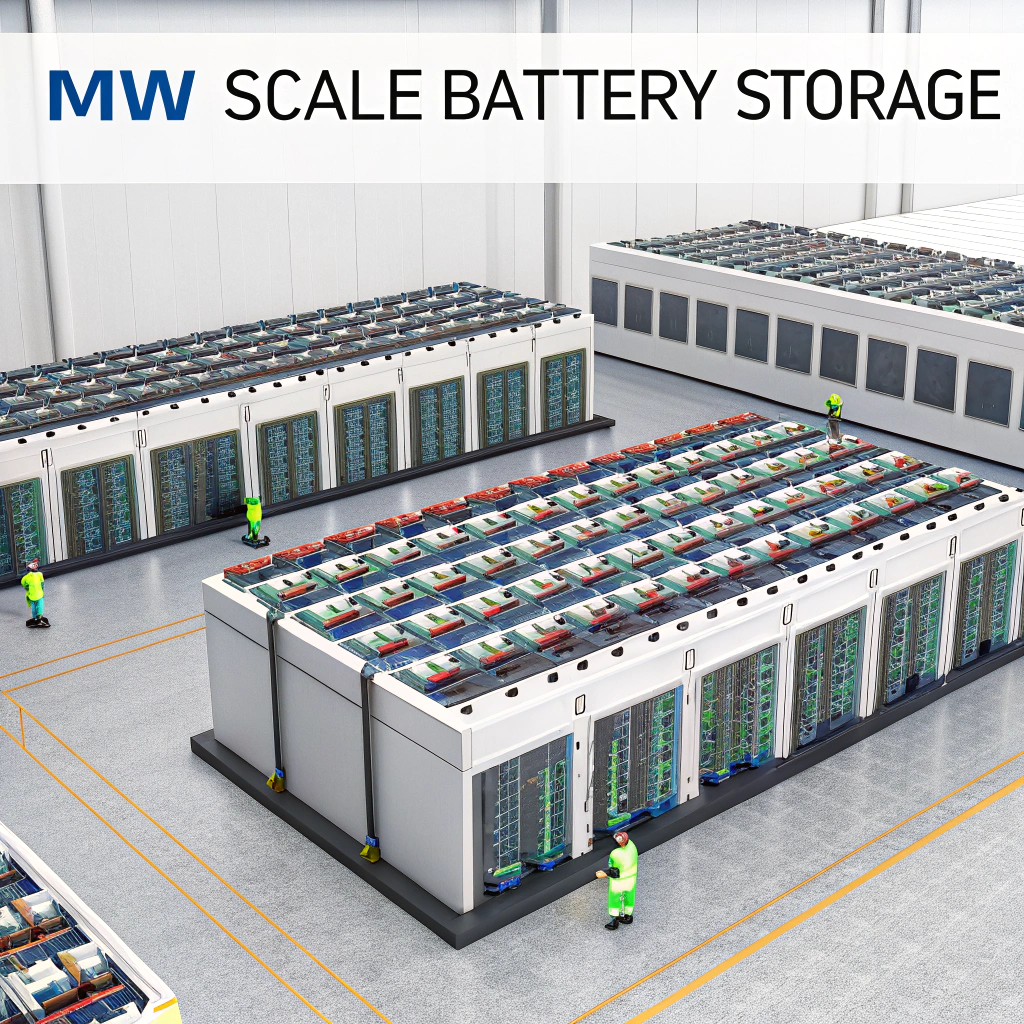
The energy landscape is transforming faster than most utilities can adapt. As someone who's witnessed firsthand how battery storage can rescue a failing grid during peak demand, I'm convinced this technology holds the key to our energy future. Let me walk you through why MW-scale deployments are becoming indispensable.
Fortify Your Grid: Enhancing Stability & Resilience with MW-Scale Battery Storage Deployments
What if your grid could heal itself during emergencies? MW-scale batteries make this possible.
MW-scale battery storage fortifies grid resilience by providing black-start capabilities4, frequency regulation, and seamless integration of renewables - acting as a shock absorber for the entire power system.
The Multi-Layered Protection of Battery Storage
Having worked through multiple grid emergencies, I've seen how battery storage provides three critical protection layers:
- Instant Response: Unlike traditional plants that take minutes to hours to come online, MW-scale batteries respond in milliseconds to grid disturbances
- Renewable Smoothing: They absorb solar/wind variability that would otherwise cause voltage fluctuations
- Capacity Stacking: Single installations can provide multiple services simultaneously
| Grid Challenge | Battery Solution | Response Time |
|---|---|---|
| Blackouts | Black-start power | <1 second |
| Frequency Dips | Automatic regulation | 20ms |
| Renewable Gaps | Ramp rate control | Sub-second |
The California ISO's experience proves this works - their battery fleets prevented rolling blackouts during record heat waves by injecting 1,000+ MW within seconds when conventional plants failed.
Accelerating Your Energy Transition: The Economic Imperative of MW-Scale Battery Storage
Why are utilities rushing to deploy MW-scale batteries? The numbers speak for themselves.
MW-scale battery storage delivers 40-60% cost savings compared to peaker plants, enables higher renewable penetration, and creates new revenue streams through energy arbitrage and grid services.
The Business Case for Battery Storage
Having crunched the numbers for multiple utilities, the economic advantages5 become undeniable when you consider:
Capital Expenditure
- 4-hour battery system: $350-$500/kW
- New gas peaker: $700-$1,000/kW
Operational Flexibility
- Batteries can switch between charging/discharging 100+ times daily
- Peaker plants require minimum run times of several hours
Revenue Opportunities
- Frequency regulation markets ($50-$100/MW-hour)
- Capacity payments ($5-$15/kW-month)
- Energy arbitrage (buy low, sell high)
A recent Lazard study shows battery storage already outcompetes gas peakers in many markets, with costs projected to fall another 30% by 2025.
Maximize Your Energy Assets: The Untapped Potential of MW-Scale Battery Storage for Commercial & Utilities
Are you getting full value from your energy infrastructure? Most aren't - yet.
MW-scale battery storage unlocks hidden value in existing assets by enabling peak shaving, demand charge management, and hybrid system optimization - delivering ROI in 3-5 years for most commercial applications.
The Asset Optimization Playbook
From shopping malls to manufacturing plants, I've helped clients tap into three powerful value streams:
-
Demand Charge Reduction
- Typical savings: 20-40% on utility bills
- Example: 2MW system saves $250k annually for a cold storage facility
-
Hybrid System Synergies
- Pairing batteries with solar increases self-consumption by 50-70%
- Extends generator life by reducing runtime hours
-
Grid Services Participation
- Aggregated commercial systems can bid into wholesale markets
- Additional revenue of $30-$80/kW-year
| Application | Key Benefit | Typical Payback |
|---|---|---|
| Retail | Demand charge management | 4 years |
| Industrial | Process power quality | 3 years |
| Municipal | Emergency backup + revenue | 5 years |
The most successful deployments combine multiple value streams - like a Michigan hospital that cut energy costs 35% while ensuring critical backup power.
Conclusion
MW-scale battery storage transforms grids from passive to active, unlocking reliability, economic, and sustainability benefits that make it indispensable for our energy future.
Explore how MW-scale battery storage enhances grid reliability and supports renewable energy integration. ↩
Learn about the critical role of battery storage in maintaining a stable and reliable power grid. ↩
Discover how battery systems manage the variability of renewable energy sources. ↩
Understand the importance of black-start capabilities for restoring power during outages. ↩
Find out how battery storage can lead to significant cost savings and new revenue opportunities. ↩