The Hidden Power Inside — Technical Secrets of Energy Storage Batteries
Ever wondered what makes energy storage batteries the unsung heroes of modern power systems? Their ability to store and release energy efficiently is revolutionizing industries worldwide.
Energy storage batteries1 store power through electrochemical reactions2, converting electrical energy into chemical energy during charging and reversing the process during discharge, enabling efficient energy management.
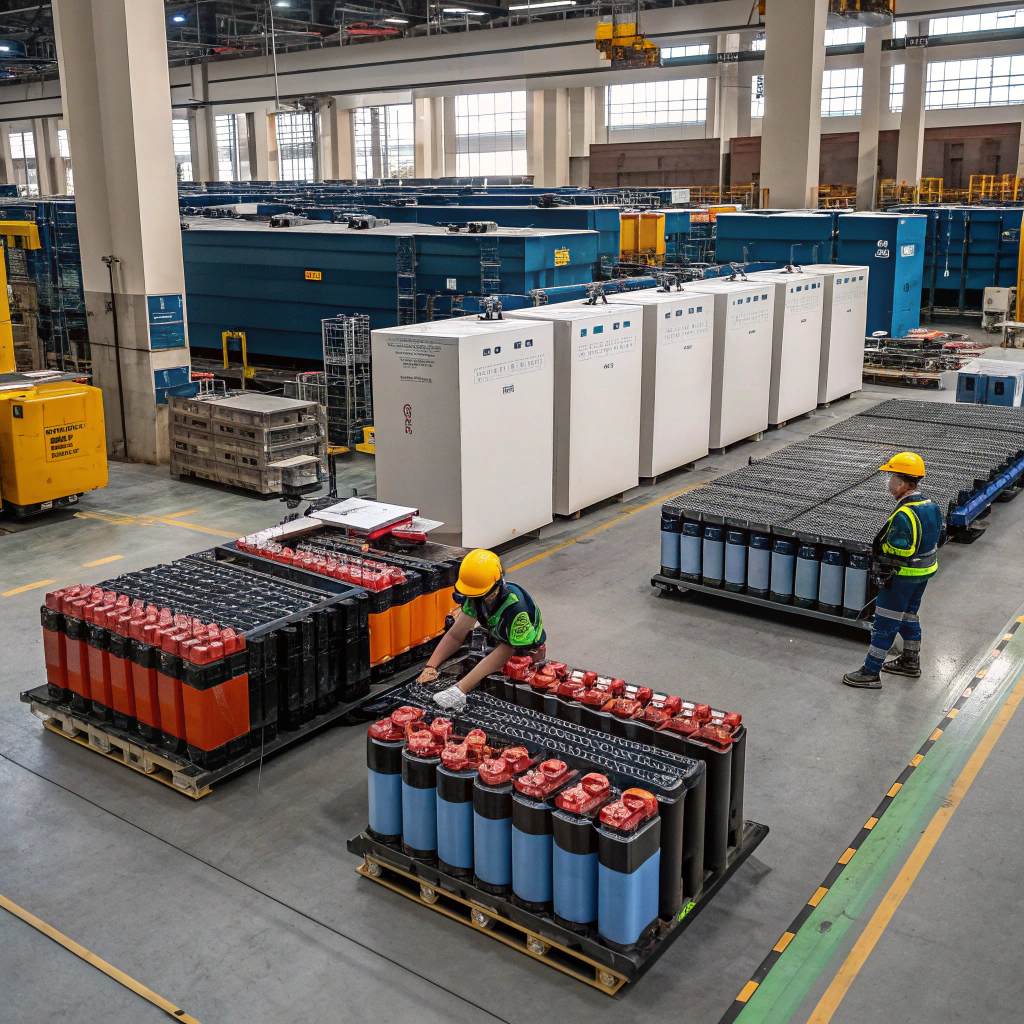
From smartphones to electric grids, energy storage batteries are the backbone of our tech-driven world. But how do they really work? Let’s dive into the science and engineering behind these powerhouses.
How Do Energy Storage Batteries Actually Store Power? Explained Simply.
Why do some batteries last longer than others? The secret lies in their core chemistry and design.
Batteries store power through electrochemical cells where ions move between electrodes (anode and cathode) via an electrolyte, creating a reversible reaction that stores energy chemically and releases it as electricity.
The Science Behind Energy Storage
-
Electrochemical Reactions:
- During charging, electrons flow from the cathode to the anode, storing energy as chemical potential.
- Discharging reverses this process, releasing stored energy as electricity.
-
Key Components:
- Anode: Typically graphite (in Li-ion), absorbs ions during charging.
- Cathode: Made of lithium metal oxides, releases ions during discharge.
- Electrolyte: Facilitates ion movement while preventing electron flow.
| Process | Anode Reaction | Cathode Reaction |
|---|---|---|
| Charging | Li⁺ + e⁻ → Li (stored) | LiCoO₂ → Li₁₋ₓCoO₂ + xLi⁺ |
| Discharging | Li → Li⁺ + e⁻ (released) | Li₁₋ₓCoO₂ + xLi⁺ → LiCoO₂ |
- Efficiency Factors:
- Charge/Discharge Rates: Faster cycles can reduce efficiency due to heat.
- Temperature: Extreme cold/heat slows ion movement, cutting capacity.
Lithium-ion batteries use liquid electrolytes.False
Modern Li-ion batteries often use solid or polymer electrolytes for safety and efficiency.
What Determines Battery Life: Cells, BMS, and Cooling Systems
Why do some batteries degrade faster despite identical usage? The answer goes beyond chemistry.
Battery lifespan depends on cell quality, Battery Management Systems (BMS)3, and thermal regulation. A robust BMS optimizes charging cycles, while cooling systems prevent overheating-induced degradation.
Breaking Down Longevity Factors
-
Cell Quality:
- Cycle Life: High-quality LiFePO4 cells endure 3,000+ cycles vs. 500-1,000 for standard Li-ion.
- Degradation Mechanisms:
- SEI layer growth (anode)
- Cathode cracking
-
BMS Intelligence:
- Prevents overcharge/discharge.
- Balances cell voltages.
- Estimates State of Health (SOH).
-
Thermal Management:
- Passive Cooling: Heat sinks (low cost, limited effectiveness).
- Active Cooling: Liquid cooling (used in EVs) maintains 20-40°C optimal range.
Case Study: Tesla’s 2170 cells lose only 10% capacity after 200,000 miles due to advanced BMS and liquid cooling.
All batteries need active cooling systems.False
Smaller batteries (e.g., smartphones) often rely on passive cooling due to lower heat generation.
How Is Energy Storage Safety Ensured? Three Key Technologies Explained
What stops batteries from overheating or exploding? Multiple layers of protection work silently behind the scenes.
Battery safety relies on separator shutoffs[^4], flame-retardant electrolytes, and pressure vents. These technologies prevent thermal runaway by isolating faults and dissipating heat/energy rapidly.
Deep Dive into Safety Systems
-
Separator Shutoff:
- Polyethylene separators melt at 130°C, blocking ion flow to halt reactions.
- Ceramic-coated separators add thermal stability.
-
Electrolyte Innovations:
- Additives like phosphates reduce flammability.
- Solid-state electrolytes eliminate liquid fire risks.
-
Pressure Management:
- Vents release gas during overpressure.
- Current interrupt devices (CIDs) break circuits if pressure exceeds 10-20 psi.
Thermal Runaway Prevention:
- Stage 1: BMS detects abnormal heat → reduces charge rate.
- Stage 2: Separator activates → isolates damaged cells.
- Stage 3: Vents release gases → prevents explosion.
Solid-state batteries are completely immune to thermal runaway.False
While safer, they can still overheat due to metallic lithium dendrites.
Conclusion
Energy storage batteries1 combine advanced chemistry, intelligent management, and multi-layer safety to power our world efficiently and reliably. Understanding these systems unlocks their full potential.
Explore the transformative impact of energy storage batteries on modern power systems and their role in efficiency. ↩
Learn about the fundamental processes that enable batteries to store and release energy effectively. ↩
Discover how BMS technology enhances battery performance and lifespan through intelligent management. ↩