Unlock Substantial Tax Credits & Incentives: Your Factory’s Guide to Profiting from Solar Energy?
Problem: Rising energy costs crushing your factory's profits? Agitation: Every month, utility bills drain resources that could fuel growth. Solution: Solar energy transforms expenses into revenue streams.
Factory solar installations qualify for federal tax credits up to 30%, state incentives, and accelerated depreciation, generating immediate cash flow while reducing long-term energy costs.
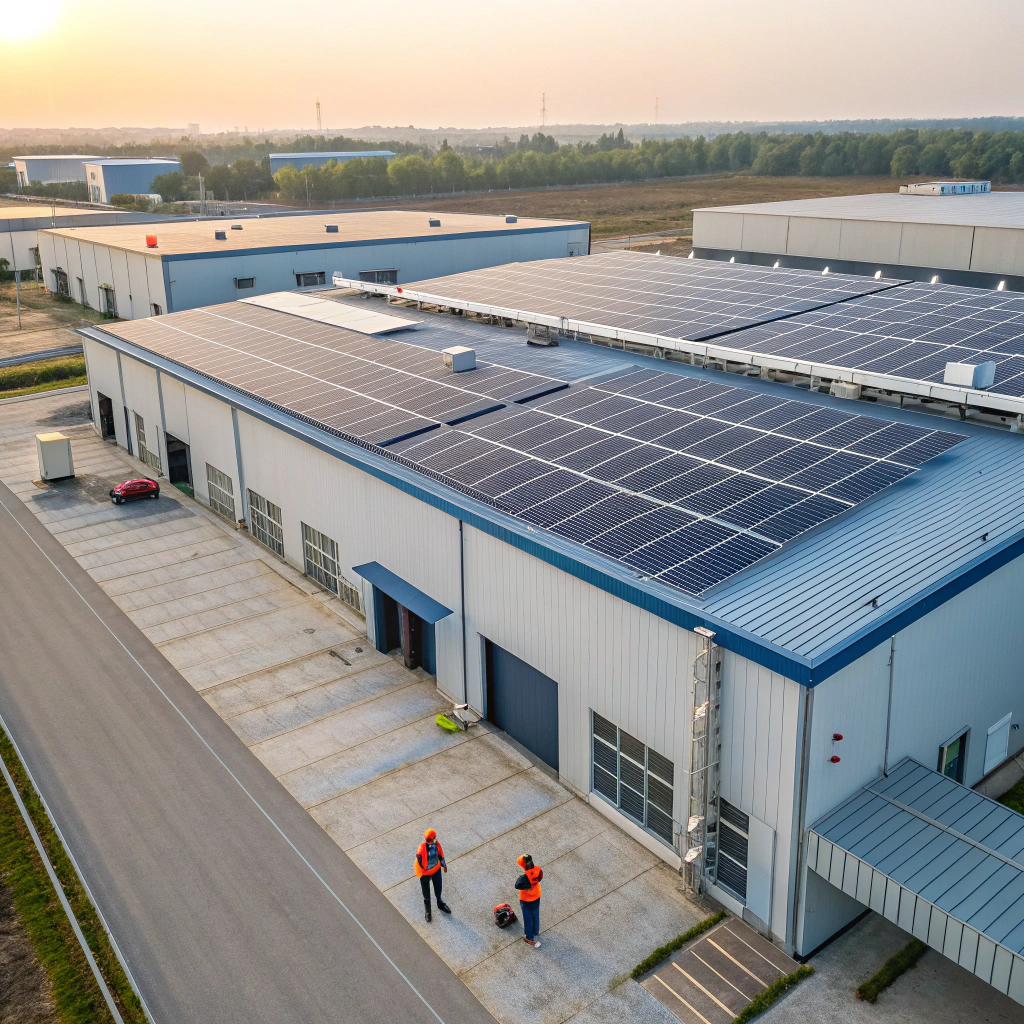
The solar revolution isn't just about environmental responsibility—it's about financial transformation1. Smart factory owners are discovering that their rooftops represent untapped goldmines, capable of generating substantial returns while slashing operational expenses. Let me walk you through how this game-changing opportunity could revolutionize your bottom line.
Turn Your Factory Roof Into an Asset: Generating Revenue & Reducing Liabilities with Solar PV?
Problem: Your factory roof sits idle while energy costs2 soar. Agitation: Every square foot represents missed revenue potential. Solution: Solar PV transforms dead space into profit centers.
Commercial solar installations generate revenue through net metering, selling excess power back to the grid while eliminating monthly electricity bills for decades.
Maximizing Your Rooftop's Revenue Potential
I've witnessed factories transform their energy profiles overnight by leveraging their most underutilized asset—roof space. The financial mechanics are compelling: a typical 100,000 square foot factory roof can accommodate a 1-2 MW solar system, generating $150,000-$300,000 annually in energy savings and revenue.
The beauty lies in the dual benefit structure. During peak production hours, your factory consumes the solar-generated electricity directly, avoiding utility charges. When production slows or during weekends, excess power flows back to the grid, earning credits through net metering programs.
| Factory Size | Solar Capacity | Annual Savings | ROI Timeline |
|---|---|---|---|
| 50,000 sq ft | 500-750 kW | $75,000-$150,000 | 4-6 years |
| 100,000 sq ft | 1-1.5 MW | $150,000-$300,000 | 4-5 years |
| 200,000 sq ft | 2-3 MW | $300,000-$600,000 | 3-4 years |
Financial Engineering Through Tax Incentives
The federal Investment Tax Credit (ITC) provides an immediate 30% reduction in your solar system cost—essentially a government subsidy for your energy independence3. Combined with accelerated depreciation schedules, many factories achieve positive cash flow from day one. State and local incentives often stack on top, creating compelling financial packages that make solar installations virtually risk-free investments.
Boost Your Energy Self-Sufficiency: Reduce Grid Dependency & Gain Control with Factory Solar?
Problem: Grid dependency leaves you vulnerable to price volatility and outages. Agitation: Energy costs fluctuate unpredictably, disrupting budget planning. Solution: Solar plus storage provides energy autonomy and predictable costs.
Factory solar systems with battery storage4 can achieve 60-90% energy independence, protecting against grid outages while locking in predictable energy costs for 25+ years.
Strategic Energy Independence Planning
Energy independence isn't just about reducing bills—it's about operational control. I've seen manufacturers strategically size their solar installations to match their baseload consumption, ensuring consistent power availability during peak demand periods when grid electricity costs spike.
Battery storage integration takes this strategy further, enabling factories to store excess solar production for use during expensive peak hours or grid outages. This approach transforms your facility into a resilient, self-sustaining operation that maintains productivity regardless of external energy market conditions.
Peak Demand Management and Cost Optimization
Smart factories use solar strategically to avoid demand charges—those expensive fees utilities impose based on your highest usage periods. By timing energy-intensive operations during peak solar production hours and using stored solar power during expensive peak periods, manufacturers often see 40-60% reductions in total energy costs beyond just kilowatt-hour savings.
| Energy Strategy | Grid Dependency | Cost Predictability | Outage Resilience |
|---|---|---|---|
| Grid Only | 100% | Low | None |
| Solar Only | 40-60% | Medium | Limited |
| Solar + Storage | 10-40% | High | High |
Showcase Your Commitment to a Greener Future: How Factory Solar Elevates Your Corporate Image?
Problem: Customers increasingly demand environmental responsibility from suppliers. Agitation: Without green credentials, you risk losing contracts to eco-conscious competitors. Solution: Visible solar installations demonstrate tangible environmental commitment.
Factory solar installations provide measurable carbon footprint reduction5, enhancing brand reputation, attracting eco-conscious customers, and meeting corporate sustainability requirements for major contracts.
Building Competitive Advantage Through Sustainability
In today's market, environmental stewardship isn't optional—it's a competitive necessity. I've watched factories secure major contracts specifically because their solar installations demonstrated genuine commitment to sustainability. Large corporations increasingly require suppliers to meet environmental standards, and visible solar arrays provide immediate credibility.
The marketing value extends beyond contract requirements. Factory solar installations generate compelling content for marketing materials, website features, and customer communications. Every kilowatt-hour of solar production translates to measurable carbon reduction—typically 0.7-0.9 pounds of CO2 per kWh—providing concrete data for sustainability reports and marketing claims.
Stakeholder Engagement and Employee Pride
Solar installations create pride among employees and positive community relations. Workers appreciate working for environmentally responsible employers, while local communities view solar-equipped factories as progressive community partners. This enhanced reputation often translates to easier permitting processes, community support for expansions, and improved recruitment of quality employees.
| Benefit Category | Measurable Impact | Timeline |
|---|---|---|
| Carbon Reduction | 500-2000 tons CO2/year | Immediate |
| Marketing Value | Increased contract wins | 6-12 months |
| Employee Satisfaction | Improved retention | 12-24 months |
Conclusion
Factory solar delivers triple benefits: substantial tax savings, energy independence, and enhanced corporate reputation while generating decades of profitable returns.
Learn how solar energy can transform your factory's financial outlook and profitability. ↩
Explore the ways solar energy can significantly lower your factory's energy expenses. ↩
Find out how achieving energy independence can protect your factory from price volatility and outages. ↩
Learn how integrating battery storage can maximize your solar energy use and provide backup during outages. ↩
Understand the significance of reducing your carbon footprint and how solar energy contributes to sustainability. ↩